
Last updated November 15, 2026
 Sweep & inspection
 Caps & crowns
 Flue relining
 Masonry repair
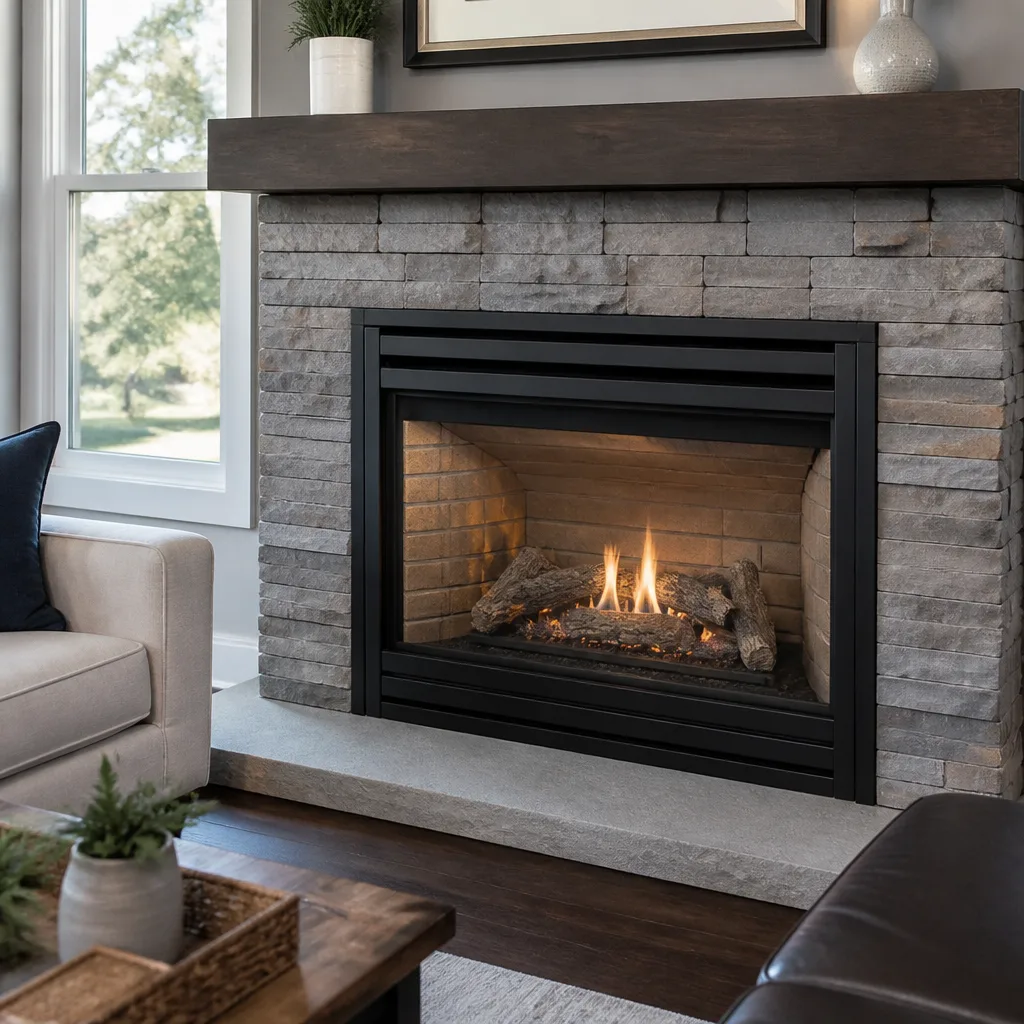 Gas fireplace service
Level 1 sweep and inspection to the NFPA 211 annual standard - flue, crown, cap, and flashing checked and photographed
Chimney sweep logs do not sweep chimneys. They loosen some creosote - which then falls where a brush and vacuum still have to collect it.
Chimney Cleaning Warning Signs: A Fairfield Homeowner’s Reference Guide
A white haze on your fireplace brickwork isn’t a cleaning problem. It’s a moisture signal, and it often means the crown or the flashing above your firebox has already failed. Most homeowners assume the first sign of chimney trouble is smoke backing into the room or a visible soot buildup, but the earliest warnings are usually quiet: a chalky stain, a whiff of damp air when the fire is cold, a damper that suddenly grinds. This reference guide separates the cosmetic symptoms from the structural ones, so you know which problems can wait for your next scheduled chimney sweep and which mean you shouldn’t light another fire until a technician clears the system. It’s written for Fairfield homeowners in older houses, newer builds, and everything between.
Quick Answer
The warning signs that matter most are structural, not cosmetic: white efflorescence or crumbling brick, rust or stiffness in a damper, brown ceiling stains, smoke rolling out of the firebox, and a sharp acrid smell when the fireplace is cold. Any of those, especially combined with a fire that’s hard to start or smokes into the room, means you should stop using the fireplace and get an inspection. A dusty firebox or light soot on the glass is normal; a compromised flue is not.
Styles & brands we work with
- Sweep & inspection
- Caps & crowns
- Flue relining
- Masonry repair
- Gas fireplace service
Table of Contents
- Visual Symptom Decoder: What Each Sign Actually Means
- Smell Diagnostics: Musty, Acrid, or Gas
- Draft Warnings: Smoke Rollout and Slow Fires
- What to Look For Outside the House
- The Stop-Use Threshold: When Not to Light a Fire
- How Fairfield’s Climate and Housing Shape These Warnings
- The Dryer Vent Warning Signs You’re Probably Ignoring
- What Repairs Each Warning Sign Points To
Visual Symptom Decoder: What Each Sign Actually Means
Each visible chimney symptom points to a specific failure mode. Efflorescence means moisture is migrating through the masonry and leaving mineral salts behind. Spalling brick means water has penetrated deep enough to freeze and crack the brick face. A rusted damper means condensation or water intrusion is reaching metal components. A brown ceiling stain near the chimney chase means water is getting past the flashing or crown and traveling along the framing.
Here’s how to read the four most common visuals:
- White, chalky haze on the firebox brick (efflorescence). This is dissolved salts pushed to the surface by moisture moving through the masonry. It’s not soot, and no amount of scrubbing will fix it because the source is water entering somewhere above. The usual culprits are a cracked crown, failed flashing at the roof line, or a missing rain cap letting water straight down the flue.
- Flaking or crumbling brick faces (spalling). When brick faces peel and fall away, the masonry has absorbed water repeatedly and the outer skin has given up. Spalling is a structural warning, not a cosmetic one. It compresses the timeline for a repair because the brick itself is losing integrity.
- A rusted or stiff damper. A damper that grinds, sticks open, or shows orange rust is telling you moisture is present in the firebox. It may also mean the damper no longer seals, which lets heated air escape up the flue when the fireplace is idle.
- Brown stains on the ceiling or wall near the chimney chase. These are water stains, and near a chimney they almost always trace back to flashing separation or a failed crown. They’re also a sign the leak has been running long enough to reach interior finishes.
Fairfield’s older housing stock, much of it built with masonry fireplaces that have weathered many dry summers and wet winters, tends to show these signs in clusters. When you see one, look for the others. We tell you what we find and what it costs to fix it before we touch anything, and the inspection is camera-based so you can see the evidence for yourself.
Smell Diagnostics: Musty, Acrid, or Gas
The smell tells you which subsystem is failing. A musty odor points to moisture and debris. A sharp, acrid smell points to active creosote, especially in warm weather. A combustion gas odor, or any smell of gas from a gas appliance, points to a draft or venting failure and is a stop-use condition.
Musty or damp odor
A cold fireplace that smells like a basement is holding moisture. The most common cause is a missing or damaged chimney cap letting rain in, combined with debris that stays wet. Left alone, that moisture feeds the efflorescence and spalling described above. A cap is a small component and an easy fix, but the moisture damage it prevents is expensive.
Sharp, acrid smell when the fire is cold
Creosote has a distinct, biting smell that gets stronger in warm weather when there’s no draft pulling it up and out. If your fireplace smells sharp on a hot day, that’s a good sign there’s creosote built up on the flue walls. Creosote is the fuel for chimney fires, and glazed creosote in particular needs professional removal, not a homeowner brush. Call a technician before the next burn season.
Gas or combustion odor
Any smell of gas from a gas fireplace or gas appliance is a stop-use condition. Cracked heat exchangers and blocked flues can allow combustion gases, including carbon monoxide, back into the home. CO is odorless, which is exactly why a working CO detector near the appliance and an annual inspection matter. If you smell gas, leave the appliance off and call your gas utility, then call us to inspect the flue.
Smell is often the earliest and cheapest diagnostic you have. Note when it appears (cold firebox, warm day, after a rain) and mention it when you book, because it narrows down where the problem is likely to be.
Draft Warnings: Smoke Rollout and Slow Fires
Smoke rolling out of the firebox and fires that are slow to start are draft problems, and they usually point to a structural or geometry issue rather than dirty fuel. The chimney is supposed to pull smoke up and out; when it doesn’t, something in the path is blocked, undersized, or broken.
Watch for these three specific signs:
- Smoke spilling into the room when you light a fire. A little puff at startup is normal in a cold flue. Sustained rollout means the draft is failing. Causes range from a blocked or partially collapsed flue to a smoke chamber that’s never been properly shaped, to negative pressure in a tightly sealed house.
- A fire that’s genuinely hard to start. If your kindling catches but the fire struggles to draw, the flue may be undersized for the firebox, obstructed, or leaking air through a failed liner joint.
- A candle flame that flickers or leans toward the firebox. This is a simple, safe test of house pressure. A strong pull toward the firebox suggests the chimney is competing with exhaust fans or an airtight building envelope for air, which can cause backdrafting.
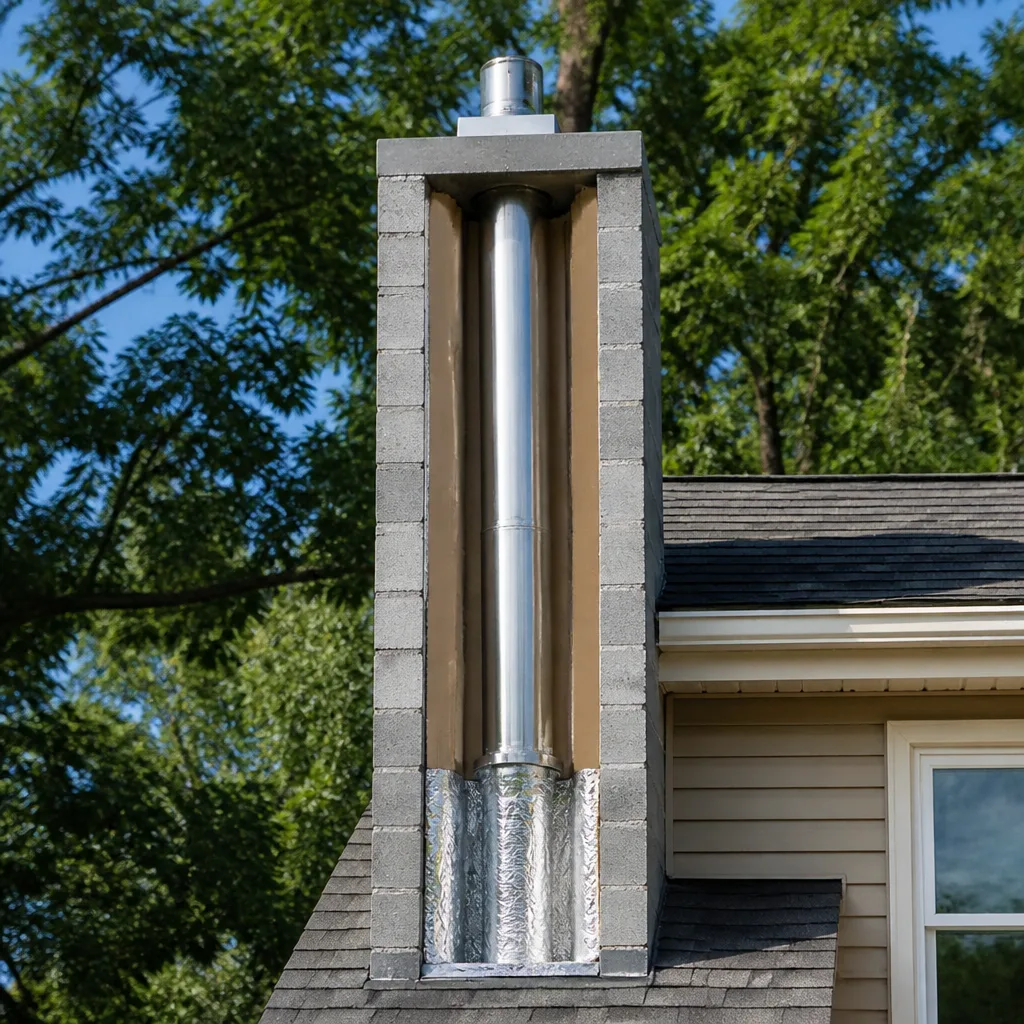
Draft problems can also indicate a flue that’s lost its smooth interior. A liner with gaps or a flue interior that’s been eaten away by acidic flue gases won’t move air efficiently. This is where a resurfacing capability matters: HeatShield can restore a deteriorated flue interior without full relining, which is a repair option many sweep-only companies simply can’t offer. If your draft warnings trace back to a damaged flue interior, that’s the conversation to have.
What to Look For Outside the House
You can spot three serious chimney problems from the ground without climbing anything: a deteriorated mortar cap, separated flashing, and a missing or damaged chimney cap. A pair of binoculars from the yard is all you need.
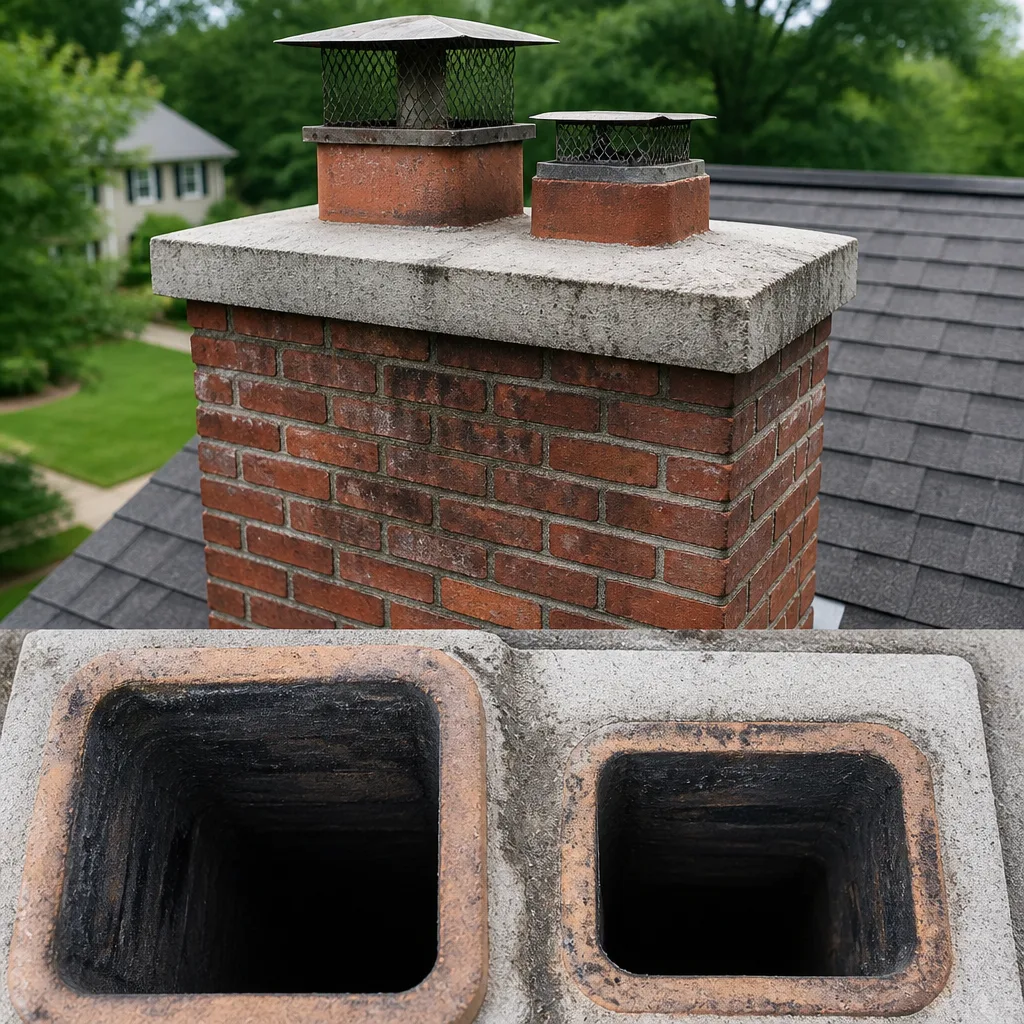
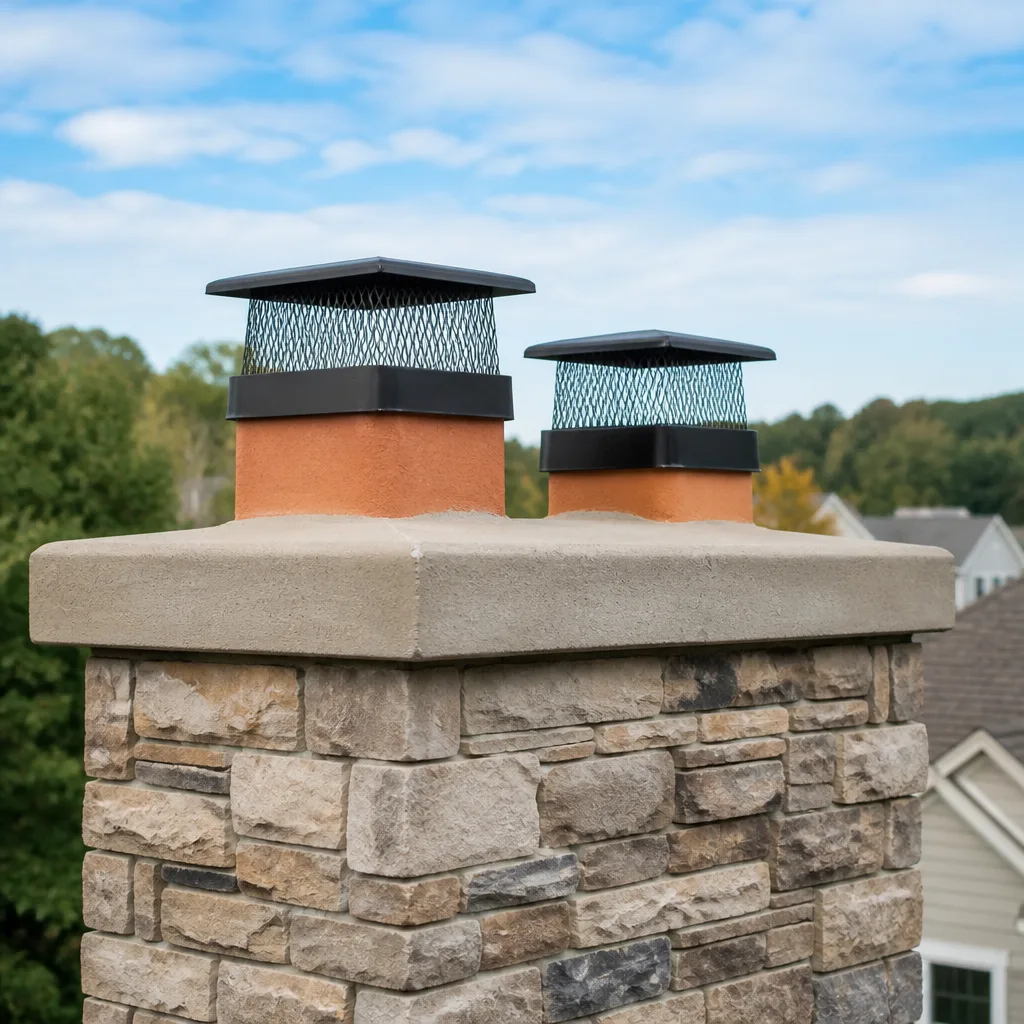
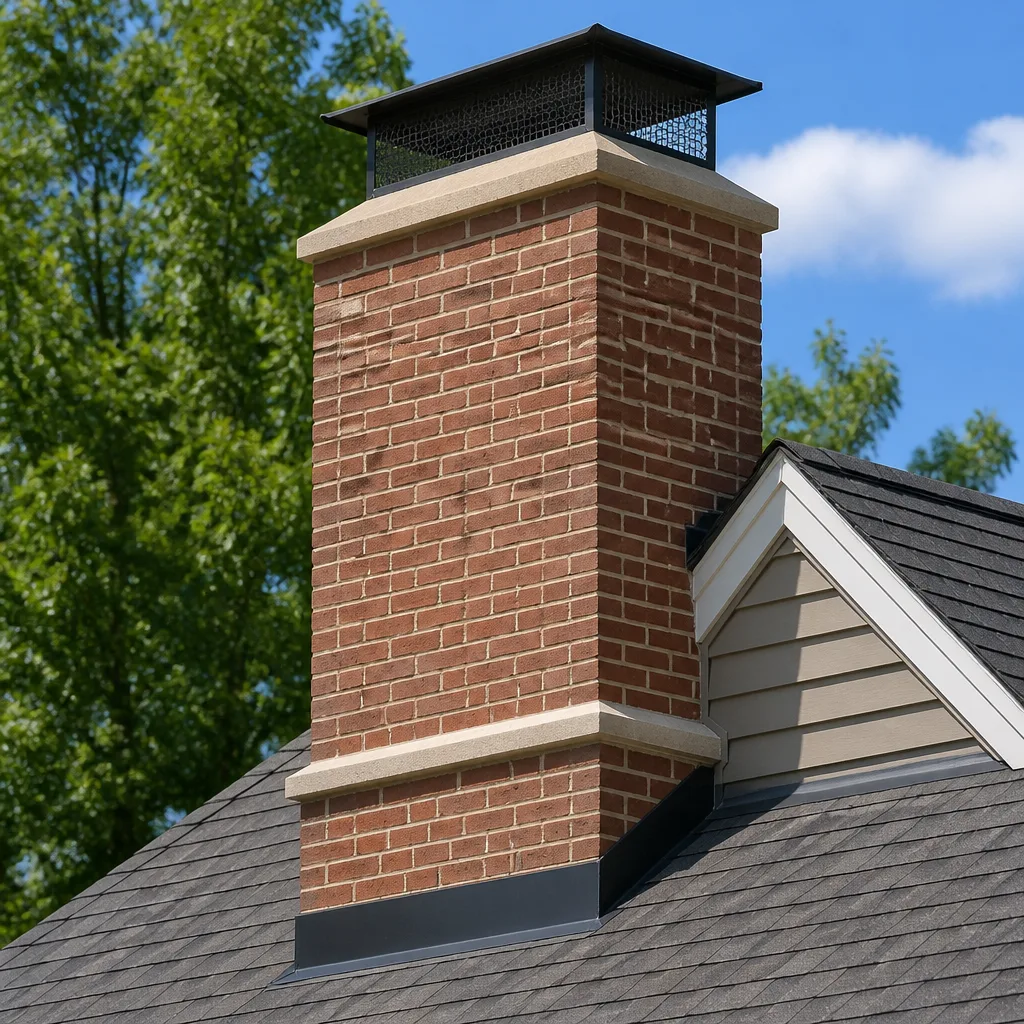
- The mortar cap (crown). The crown is the concrete or mortar cap on top of the chimney. Look for cracks, crumbling edges, or sections that have pulled away from the flue. A cracked crown is the number one entry point for the water that causes efflorescence and spalling down below. Small cracks can often be repaired before they become a roof-level problem.
- Flashing at the roof line. Flashing is the metal that seals the chimney to the roof. Look for gaps, lifted or curled edges, or visible separation where the metal meets the masonry or the shingles. Separated flashing lets water run straight down the chase, which is how you get that brown ceiling stain inside.
- The chimney cap. A missing cap is an open door for rain, birds, and debris. A damaged cap, one that’s rusted through or bent, does the same. If you can see daylight straight down the flue from the ground, you have no cap or a broken one, and water intrusion is a near certainty over time.
These exterior checks are worth doing once a season. Damage on the roof line is often visible long before it’s visible indoors, and catching it early is the difference between a modest repair and a masonry rebuild. When you book a Fairfield inspection, the technician gets on the roof and confirms what you saw from below.
The Stop-Use Threshold: When Not to Light a Fire
There are specific conditions under which you should not light the fireplace until a technician clears the system. This isn’t a gray area. If any of the following is true, stop using the fireplace and call for an inspection.
- Smoke is rolling into the room and won’t stop. Sustained rollout means the system isn’t venting, and you’re breathing combustion products.
- You smell gas from a gas appliance, or your CO detector alarms. Leave the appliance off and call your gas utility, then arrange an inspection.
- The damper won’t open fully or won’t open at all. A stuck damper turns the firebox into a smoke chamber.
- You see crumbling brick, spalling, or visible gaps in the firebox or flue. Cracks in the firebox or flue lining let heat and gases reach combustible framing.
- You’ve had a chimney fire (even a small one). A fire you heard roaring, or one that sent flames or sparks from the top, means the flue needs a full inspection before the next burn. A chimney fire can damage the liner without obvious outward signs.
- A brown ceiling stain is actively spreading near the chase. Active water intrusion means part of the system is open to the weather.
One more: if it’s been more than a year since the last cleaning, don’t light the fire “just once” to test it. Creosote builds in layers that you can’t see, and a fire is what ignites it. The safe sequence is always inspect, then burn. No exception.
How Fairfield’s Climate and Housing Shape These Warnings
Fairfield’s weather matters here. Winters are mild and wet, and summers run hot and dry. That combination drives two different failure patterns: water intrusion during the wet season, and creosote drying to a hard, ignitable glaze during the long warm stretch. Both are easier to catch early than to fix late.
A mild winter doesn’t mean the chimney gets a break. Water is the enemy of masonry, and a cracked crown or separated flashing will take on water every time it rains. Our dry summers then bake the moisture-driven salts to the surface, which is why efflorescence and spalling are common findings in Fairfield homes. Older properties, especially those with masonry chimneys that have seen many seasons, are where we most often find the combination of a failed crown, a rusted damper, and a missing cap.
Housing age is the other factor. In a Fairfield home where the chimney’s condition is unknown, perhaps after a recent purchase, an honest baseline inspection is the right first step. A camera inspection and photo report show you exactly what the flue looks like before you spend anything on repairs. If you’re new to the house, book a Fairfield sweep and inspection before the first cold snap, not after.
One more local note: many Fairfield fireplaces sit inside relatively airtight modern construction, and exhaust fans can pull more air than the chimney can replace. That geometry is worth knowing when you evaluate draft warnings, because the fix might be as simple as opening a window during startup. We tell you that plainly when it’s the case, and we tell you plainly when it isn’t.
The Dryer Vent Warning Signs You’re Probably Ignoring
Your dryer vent is a fire hazard for the same reason your chimney is: heat, a fuel source, and a path that can clog. Lint is highly combustible, and a clogged vent traps heat and lint together. We handle both systems in one visit because they fail on the same logic.
The warning signs to watch for:
- Clothes take longer than one cycle to dry. Slowing dry times are the single most common early sign of a restricted vent.
- The dryer or laundry area feels unusually hot. Trapped heat has nowhere to go.
- Lint is visible around the outside vent flap, or the flap doesn’t open fully.
- A burning or musty smell in the laundry room. Stop using the dryer and call before running another load.
- The vent run is long or has multiple elbows. Long, winding runs collect lint faster.
Treat a clogged dryer vent with the same seriousness as a creosote-loaded flue, and clean the lint trap every load. A professional dryer vent cleaning removes the lint a homeowner can’t reach, and bundling it with your chimney appointment means one visit covers both fire-safety systems.
What Repairs Each Warning Sign Points To
Each warning sign maps to a specific repair, and knowing the mapping keeps you from paying for the wrong fix. The most important distinction is between a surface problem and a structural one.
- Efflorescence and water stains. Fix the source: crown repair, flashing repair, or a new chimney cap. Cleaning the brick without fixing the water is wasted effort.
- Spalling brick and deteriorated mortar. Masonry repair and repointing. The longer water is permitted to work, the larger the repair grows.
- Rusted or stiff damper. Damper replacement, often with a top-mount style that seals better when the fireplace is idle.
- Acrid smell and active creosote. Professional sweeping and, if the creosote is glazed, chemical removal. This is not a homeowner task.
- Cracked or deteriorated flue interior. Here you have options, and this is where capability matters. HeatShield resurfacing can restore a compromised flue without the cost of full relining. If the flue needs replacement, DuraFlex and Olympia Chimney liner systems are the professional-grade choice.
- Draft problems from a failed liner joint. Liner system replacement or resurfacing, depending on what the camera shows.
We work with an intentionally curated set of professional-grade brands: DuraFlex and Olympia Chimney for liner systems, HeatShield for resurfacing, and Gelco for components. These are the materials chimney engineers specify. When a repair is needed, the diagnosis and the fix happen with the same team, so you’re not handed off to a second contractor after the inspection reveals damage.
Common Mistakes to Avoid
- Painting over efflorescence. Paint traps the moisture in the masonry instead of stopping it outside, which accelerates spalling. Fix the water source first.
- Treating a rusted damper as a cosmetic issue. Rust in the firebox means moisture is present, and a damper that won’t seal is a draft problem. Both get worse, not better, with time.
- Skipping the inspection because there’s no visible soot. Creosote and flue damage hide inside the flue where you can’t see them from the firebox. Only a camera inspection settles it.
- Lighting a test fire after you smell acrid creosote. A fire is the ignition source. If it smells sharp on a cold day, don’t test it.
- Assuming a mild Fairfield winter means the chimney is safe. Mild winters still bring rain, and rain through a failed crown is the root of most masonry damage we find.
- Ignoring the dryer vent because the chimney seemed fine. Both are fire-safety systems. A clogged vent can fail independently of the chimney.
- Climbing on the roof yourself to “check.” Height work on a roof is a genuine fall hazard. The exterior checks in this guide are things you can do safely from the ground with binoculars; leave the roof to a trained technician.
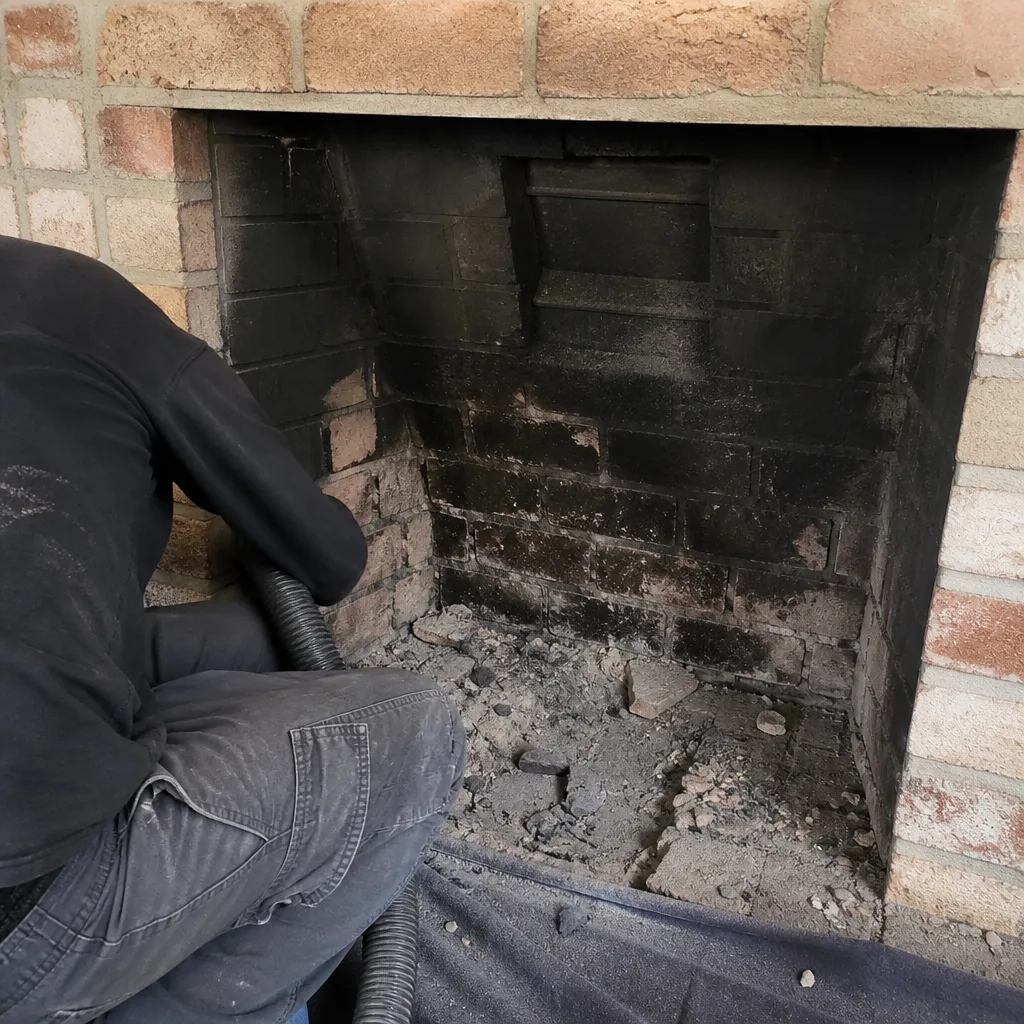
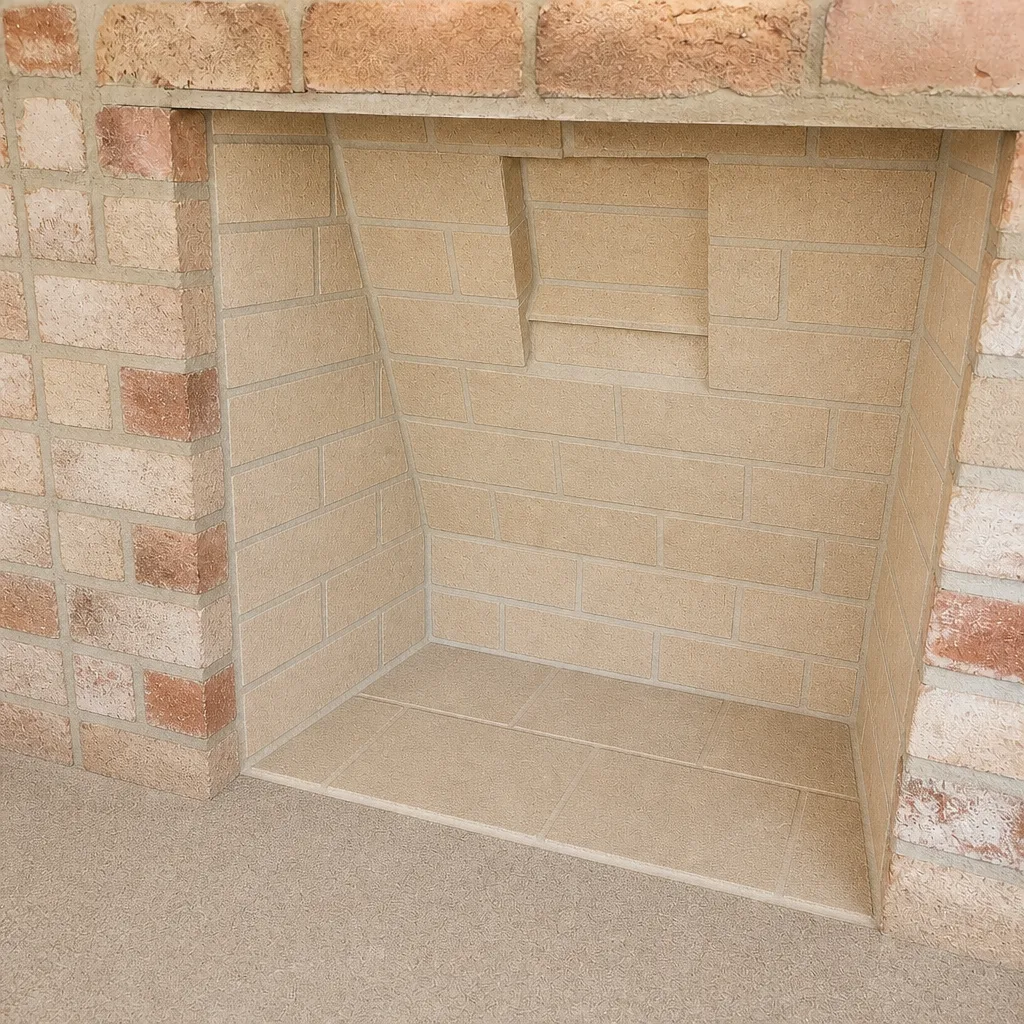
See the difference
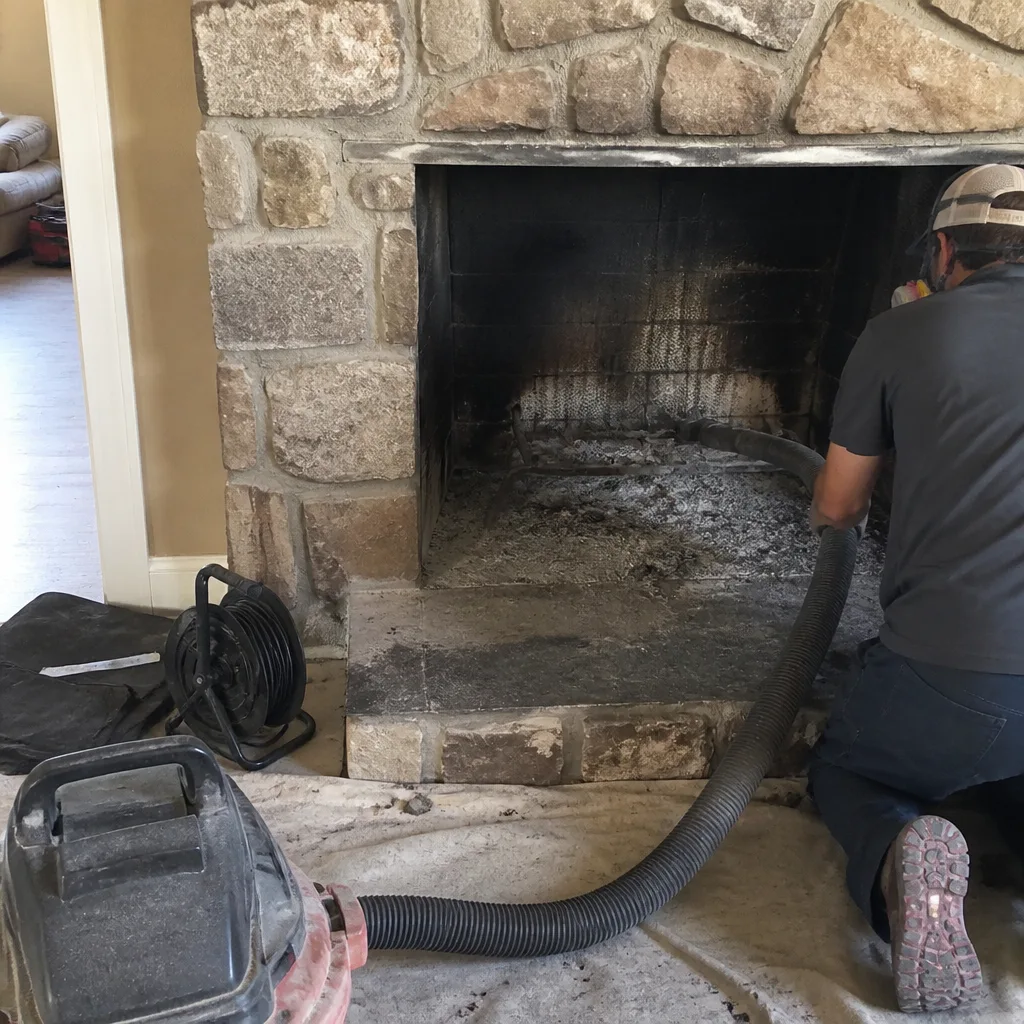 Before
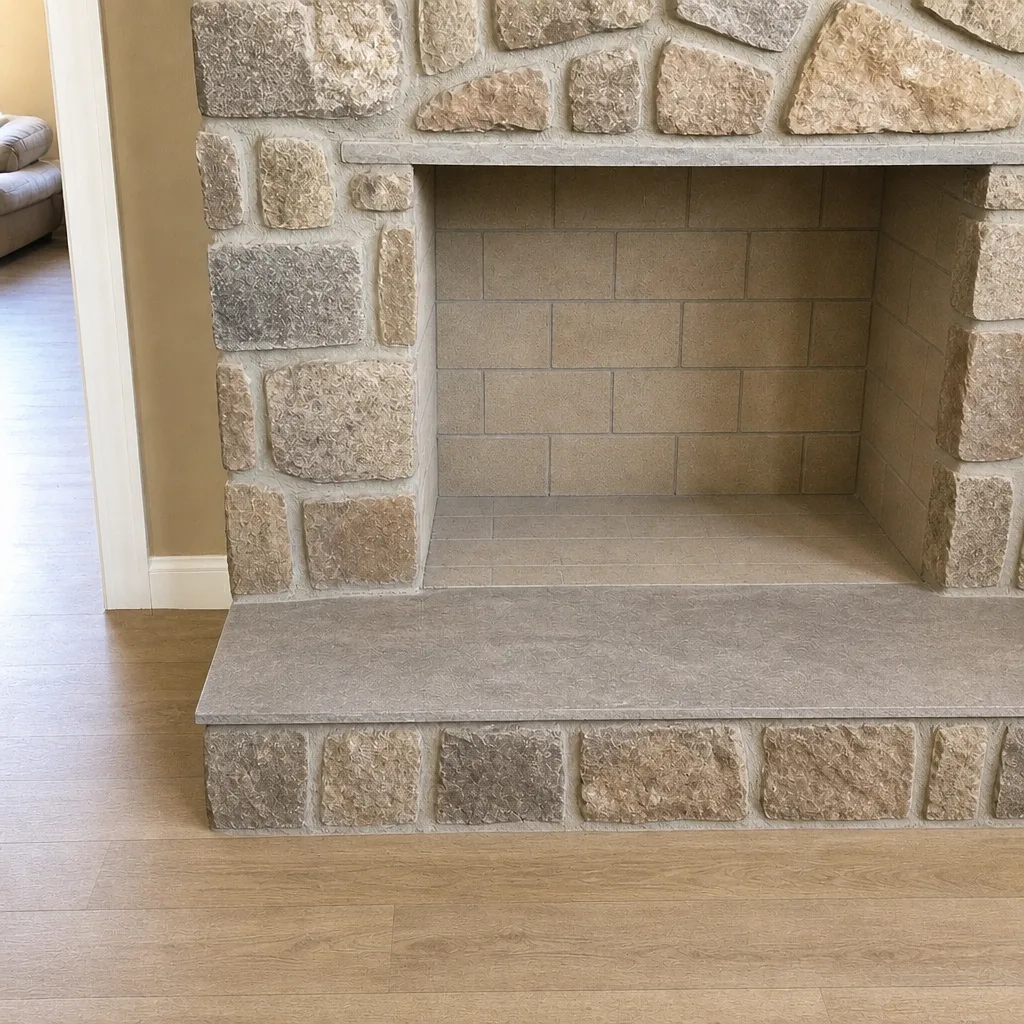 After
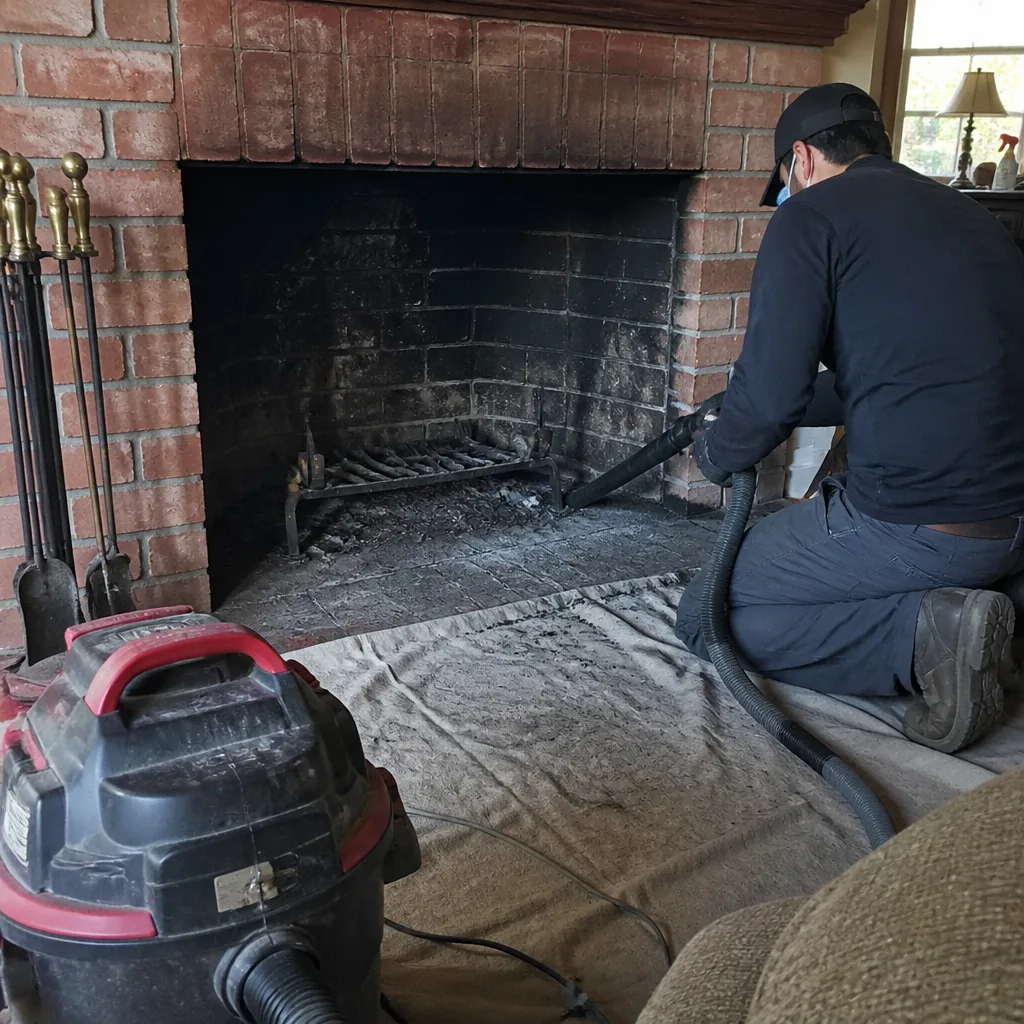 Before
 After
 Before
 After
When to Call a Professional
Call a professional when any stop-use condition applies: sustained smoke rollout, a gas smell, a CO alarm, a stuck damper, visible firebox cracks, a recent chimney fire, or active water intrusion near the chase. Call when you see efflorescence, spalling, or a rusted damper, even if the fireplace still seems to work. Call when it’s been more than a year since the last sweep, or when you’ve just bought a Fairfield house and don’t know the chimney’s history. Call when a smell tells you something is off and you can’t tell which subsystem it is. High-tension springs, wiring, gas lines, and roof-height work are hazards in this trade; we handle them so you don’t have to. Fairfield Chimney Cleaning offers free estimates in Fairfield, call (833) 946-3479. We answer 24/7. Fast dispatch from 7am to 7pm, Sunday through Friday.
Frequently Asked Questions
Most Fairfield chimneys should be inspected once a year and swept when creosote reaches about an eighth of an inch or whenever the inspection finds buildup. A fireplace in regular use may need sweeping every season, while light use may allow longer intervals between cleanings. If you’ve never had the chimney inspected, book a baseline visit now rather than waiting for a warning sign. Call (833) 946-3479 for a free estimate.
Efflorescence itself is a cosmetic mineral stain, but the moisture causing it is not cosmetic. It’s a reliable signal that water is entering the masonry, often through a cracked crown or failed flashing. Fix the water source and the stain stops coming back. Call (833) 946-3479 to book an inspection and find out where the water is getting in.
A musty smell means moisture and debris are sitting in the firebox or flue. It’s most often caused by a missing or damaged chimney cap letting rain in, sometimes combined with organic debris that stays wet. It’s a sign to get the cap checked. Call (833) 946-3479 for a free estimate.
No. Don’t light another fire until a technician has inspected the flue. Even a small chimney fire can crack a liner or damage the flue interior without obvious outward signs. The inspection is what clears the system. Call (833) 946-3479 and we’ll get someone out to look at it.
Not necessarily. Staining on the exterior masonry usually points to a crown or flashing problem, not the liner. Liner replacement is only warranted when the camera inspection shows the flue interior is damaged, cracked, or deteriorated. HeatShield resurfacing can often restore a compromised flue without full relining, so the repair is worth discussing before assuming the worst. Call (833) 946-3479 to see what the camera shows.
Cosmetic signs are surface-level and don’t affect how the system vents: light soot, dust, or a stain you’ve traced to a repaired water source. Structural signs affect moisture, draft, or venting: efflorescence plus spalling, rust in the firebox, smoke rollout, a stuck damper, or a cracked flue. If you’re not sure which side a symptom falls on, the camera inspection settles it. Call (833) 946-3479 for a free estimate.
The Bottom Line
The warning signs that matter most in Fairfield are the quiet structural ones: white efflorescence, spalling brick, a rusted damper, brown ceiling stains, smoke rollout, and an acrid creosote smell when the fire is cold. Cosmetic soot can wait for a scheduled sweep; those signs cannot. Do your exterior checks from the ground each season, treat every stop-use condition as a hard stop, and schedule your inspection before burning season rather than after the first cold snap. A camera inspection with a photo report shows you exactly what’s happening inside the flue, so no repair recommendation is a guess. If you see any of these signs, or you’ve just bought a home and want a baseline, Fairfield Chimney Cleaning can help. We handle sweep, repair, and liner work with the same team, using professional-grade brands including DuraFlex, HeatShield, and Olympia Chimney.
Call (833) 946-3479 for a free estimate. We answer 24/7. Fast dispatch from 7am to 7pm, Sunday through Friday.
Written by the team at Fairfield Chimney Cleaning.