
Last updated November 15, 2026
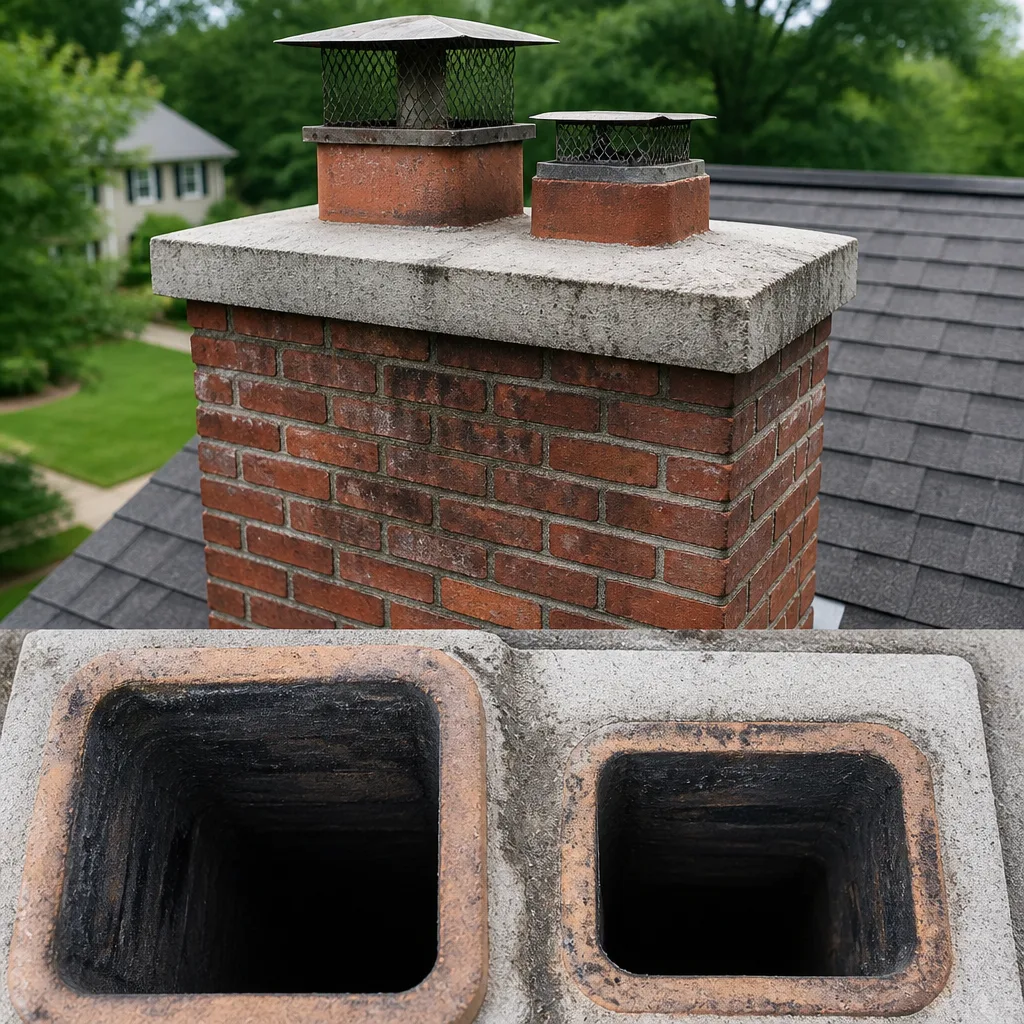 Sweep & inspection
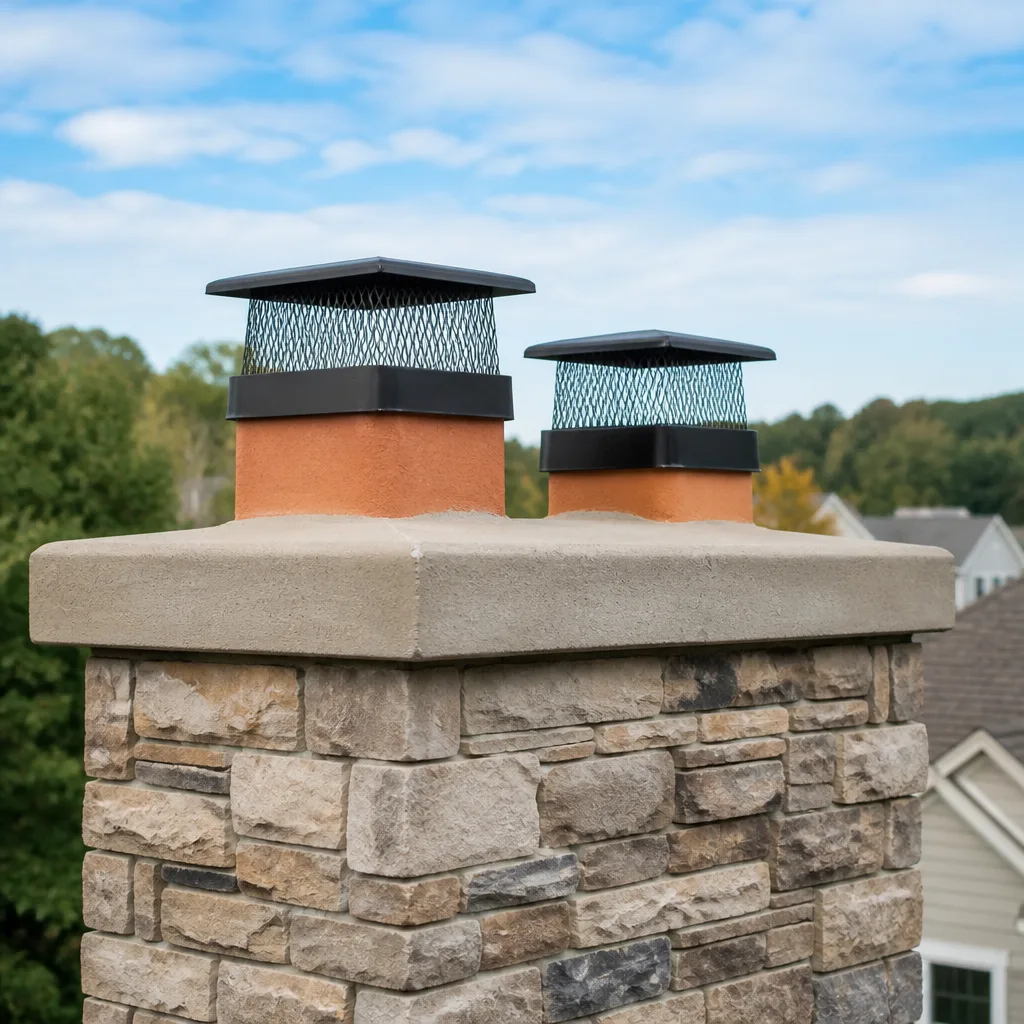 Caps & crowns
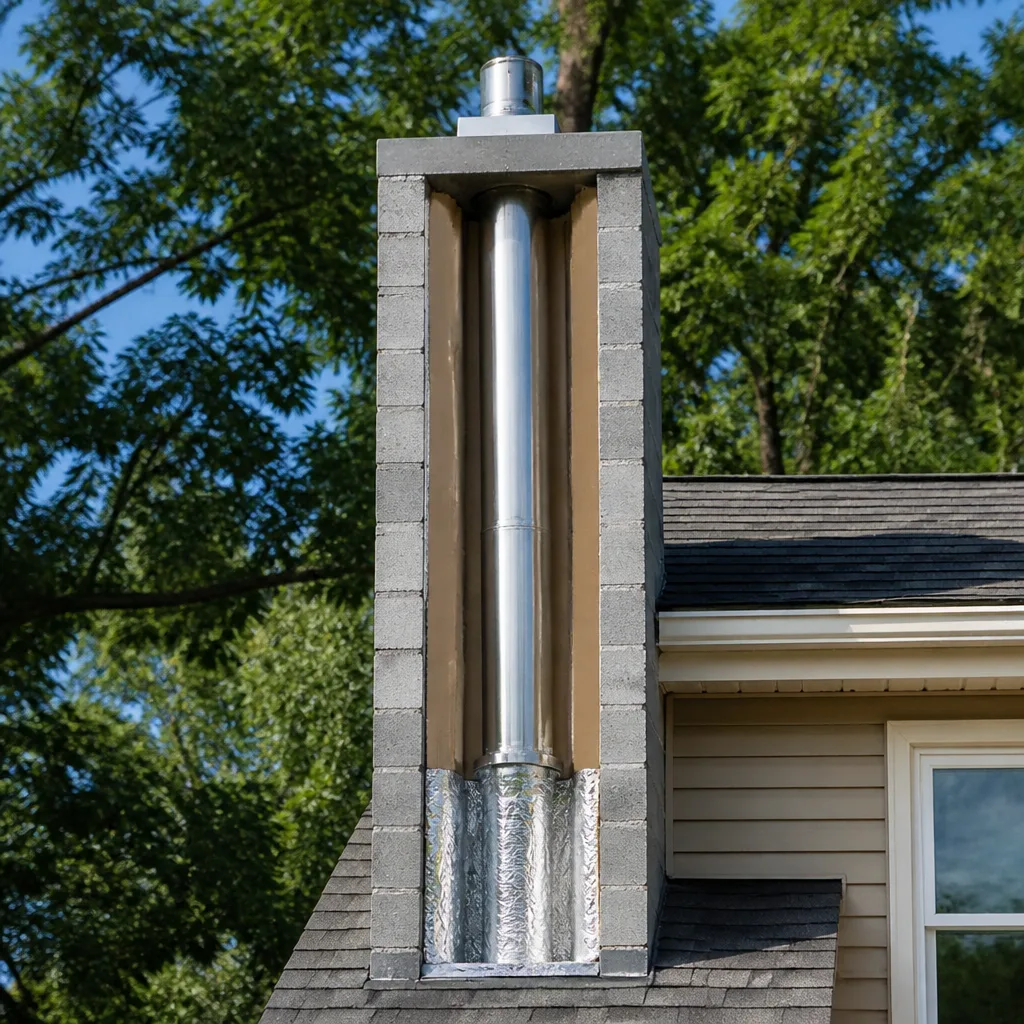 Flue relining
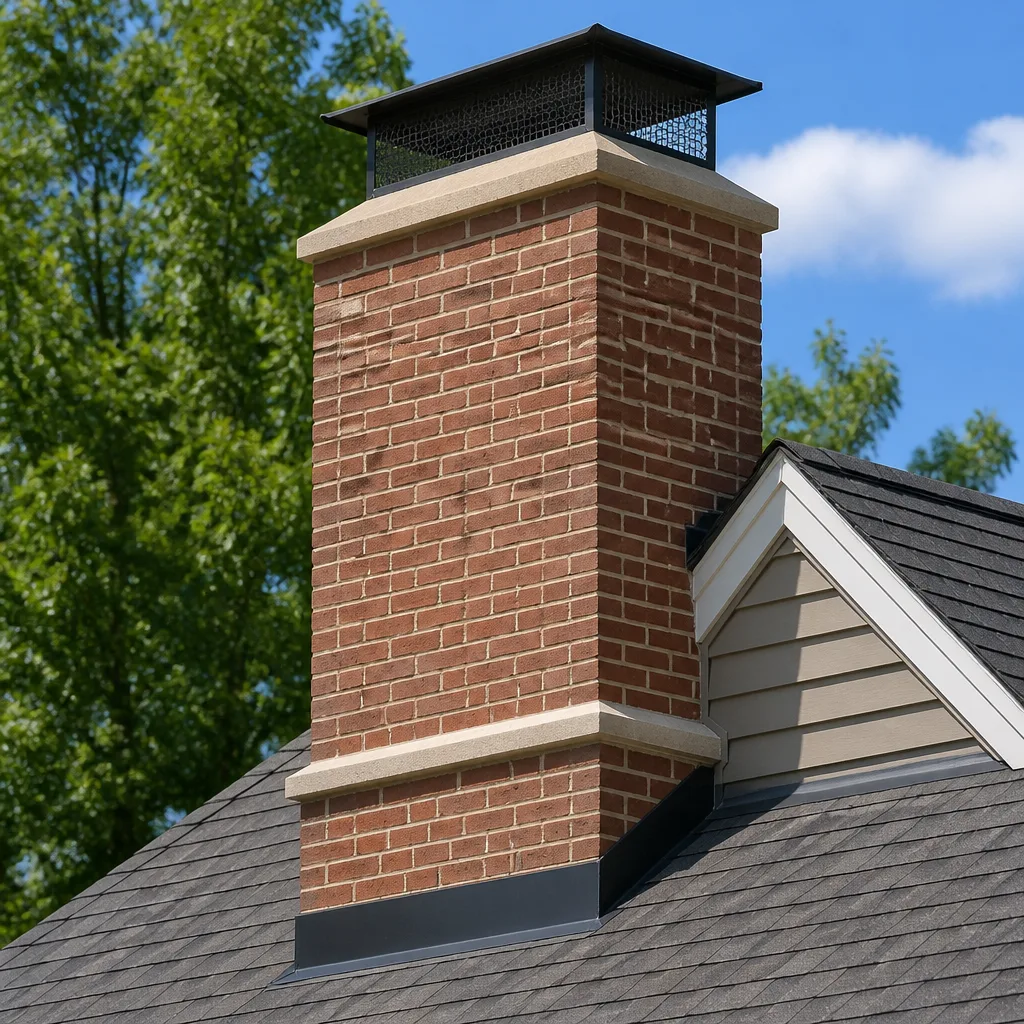 Masonry repair
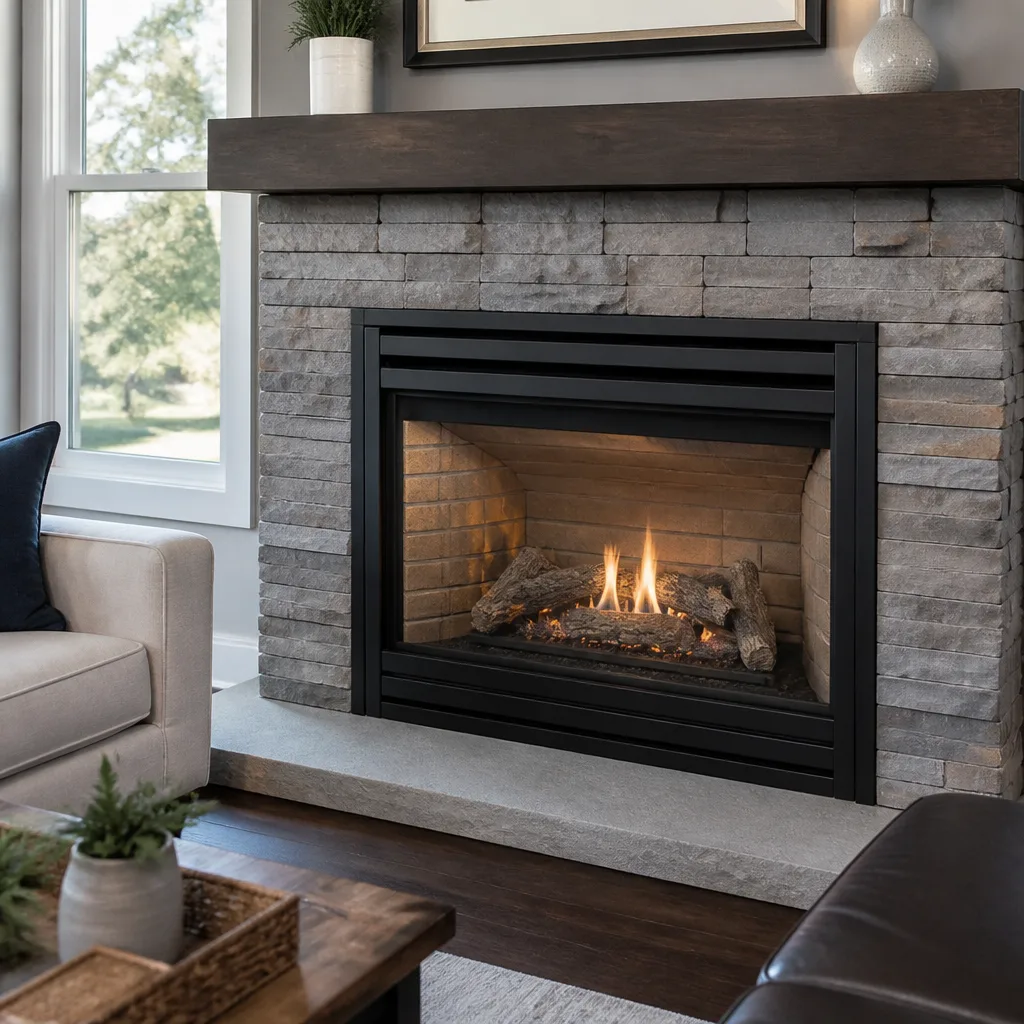 Gas fireplace service
Level 1 sweep and inspection to the NFPA 211 annual standard - flue, crown, cap, and flashing checked and photographed
Chimney sweep logs do not sweep chimneys. They loosen some creosote - which then falls where a brush and vacuum still have to collect it.
Choosing the Right Chimney Cleaning Brand: A Buyer’s Guide for Fairfield
Most chimney estimates you’ll see in Fairfield describe the work in nearly identical language. “Install stainless steel liner.” “Replace rain cap.” “Resurface crown.” The words give you no way to tell whether the material going into your flue is a professional-grade system with a real listing behind it or a generic kit from a supply house sold under a brand nobody can trace. And that gap matters, because the liner and cap you buy will sit through years of Tule fog mornings, hot valley summers, and the temperature swings that come with an inland Solano County climate. This guide names the brands that actually exist in the professional tier, explains what separates them from hardware-store substitutes, and shows you how to verify what a contractor is quoting before a single piece is cut.
Quick Answer
The right chimney brand for a Fairfield home is a professional-tier product with a published UL listing, a clear specification sheet, and a product category matched to the job: HeatShield for flue resurfacing, DuraFlex for stainless liner systems, Gelco for rain caps and draft-improving terminations, and similar specification-grade lines. A brand name alone doesn’t make an install correct. What matters is whether the contractor can show you the listing, the spec sheet, and the warranty terms before work begins, and whether the product is actually rated for your flue type and appliance. If a quote names no brand at all, ask. You’ll learn a lot from the answer.
Styles & brands we work with
- Sweep & inspection
- Caps & crowns
- Flue relining
- Masonry repair
- Gas fireplace service
Table of Contents
- Why chimney brands matter more than most homeowners realize
- Liner brands compared: Homesaver, Rockflex, Flexmaster, and DuraFlex
- Rain cap brands and when each type fits your flue
- Crown resurfacing products: CrownSeal vs. CrownCoat vs. Portland cement
- HeatShield resurfacing and when it beats a full reline
- How to verify brand installation before work begins
- Why professional-tier brands aren’t at home improvement stores
- Questions to ask any Fairfield chimney provider
Why Chimney Brands Matter More Than Most Homeowners Realize
A chimney liner is not a cosmetic item. It’s the barrier between combustion gases and the structure of your home, and it also determines how well your appliance drafts. When a liner fails, you’re looking at carbon monoxide exposure risk, creosote accumulation in places you can’t reach, and a repair bill far bigger than what a proper liner would have cost. That’s why the brand on the box matters: it tells you what testing the product has passed, what temperatures it’s rated for, and who stands behind it if something fails.
In Fairfield, the local climate adds a layer most buyers don’t think about. Winters here are mild compared to the Sierra, but the daily temperature swing between morning and afternoon is real, and the Tule fog that settles across the valley in late fall and winter brings moisture that works its way into masonry. A chimney crown or flue interior that cycles wet and dry, warm and cool, over and over will show weaknesses that don’t appear in a stable climate. Specification-grade products are built for that cycling. Generic ones often aren’t.
The brands we work with – DuraFlex, HeatShield, Gelco, Olympia Chimney, Famco, and Copperfield – are not the only good names in the trade, but they are the ones most often specified by certified chimney professionals for residential work. DuraFlex is a stainless liner system. HeatShield is a resurfacing product for flue interiors. Gelco makes caps and terminations. Famco and Copperfield handle venting and accessory components. Olympia Chimney covers a broad range of liner and component work. Knowing which brand belongs to which job is the first step in reading an estimate intelligently.
Liner Brands Compared: Homesaver, Rockflex, Flexmaster, and DuraFlex
Chimney liner brands look similar on paper – all are flexible stainless systems – but they differ in ways that show up years later. Wall thickness, corrugation design, and warranty terms are the three variables that matter most. Wall thickness refers to the gauge of the stainless steel used; thinner walls are easier to install around bends but less resistant to abrasion and heat stress. Corrugation design affects how smoothly smoke moves up the flue and how much creosote can collect in the ridges. Warranty terms tell you what the manufacturer considers a defect and what it considers normal wear.
Homesaver, Rockflex, and Flexmaster are all recognizable names in the liner category. DuraFlex is the line we work with for stainless liner installs, and the reason is straightforward: the specification sheets are clear, the UL listings are published, and the warranty terms are written for residential use in a way a homeowner can actually read and understand. That’s what “specification-grade” means. It’s not a marketing claim, it’s a paper trail.
For Fairfield homes specifically, the temperature swing range matters. A liner that’s rated for high continuous heat but not for the repeated cycling of a wood insert used on cool mornings and again in the evening will wear differently than one designed with cycling in mind. Ask any contractor you’re considering which liner they’re quoting and why that specific one suits your flue and your burn pattern. A real answer takes about thirty seconds if they know their materials.
- Wall thickness: Thicker is not automatically better, but thinner liners need more careful installation to avoid kinks and abrasion points.
- Corrugation: Smoother interior walls mean better draft and less creosote buildup along the seams.
- Warranty: Look for a written warranty that covers the liner under normal residential use, not a warranty that lapses if the flue isn’t swept on a specific schedule you can’t verify.
- Listing: The UL listing number should appear on the spec sheet and match the product being installed.
Rain Cap Brands and When Each Type Fits Your Flue
A rain cap isn’t a single product category, and treating it like one is a common mistake. A standard galvanized cap does the basic job: keeps rain and animals out. A Gelco cap or a similar professional-grade termination usually adds better material, a more accurate fit to the flue, and in some models a draft-improving design that can help a chimney that’s marginal on draw. The right cap depends on your flue geometry and what your appliance needs.
For a masonry chimney with a clay tile flue, a correctly sized cap that sits on the crown without obstructing the flue opening is usually the answer. For a metal flue, the cap needs to match the pipe diameter and the appliance’s venting requirements. For a chimney that smokes on startup or has a history of weak draft, a draft-improving cap can help if the flue itself is sound and the issue is downwash or turbulence rather than a restriction. A cap won’t fix a blocked or undersized flue, and any contractor who promises it will is telling you something useful about their judgment.
Gelco and Olympia Chimney both make caps across the range from simple weather protection to draft-improving designs. What matters for Fairfield homeowners is asking which type is going on and why, so you can tell a thoughtful recommendation from a default. If the answer is “we always use this one,” ask what would change the recommendation. A cap is a small line item on a repair estimate, but the wrong one can restrict draft or leave you dealing with the same problem next season.
Crown Resurfacing Products: CrownSeal vs. CrownCoat vs. Portland Cement
The chimney crown is the concrete cap that sits on top of the masonry chimney, and it’s the first line of defense against water entry. Cracks in the crown let water into the chimney structure, and in a climate with Tule fog cycling moisture in and out through the cooler months, that water does real damage over time. There are three broad approaches to crown repair, and they are not interchangeable.
- Portland cement: The traditional mortar mix, still a reasonable choice for a new crown or a crown with small surface cracks. It’s inexpensive and proven, but it’s rigid, so it can re-crack as the chimney moves with temperature cycles.
- CrownCoat: A proprietary coating designed for application over an existing crown. It’s more flexible than Portland cement and handles the wet-dry cycling that a Fairfield winter brings. It’s a coating, not a structural rebuild, so it works on crowns that are cracked but still sound.
- CrownSeal: A heavier, elastomeric resurfacing product that bridges larger cracks and rebuilds a worn crown surface. It’s the choice when the crown has lost material or has cracks that a thin coating can’t reliably seal.
In our experience, the failure mode on Fairfield crowns is usually the same: a rigid Portland-only repair starts fine and then re-cracks within a couple of seasons because the crown moves and the mix doesn’t. Flexible products hold up better under cycling. But the right answer depends on the crown’s condition. A crown with structural failure needs rebuilding, not coating. Any contractor should be able to tell you which of the three is appropriate and show you the condition that justifies the choice.
HeatShield Resurfacing and When It Beats a Full Reline
If your flue interior is deteriorating – spalling clay tiles, gaps at the mortar joints, or an interior surface that’s broken down – the default recommendation from many contractors is a full stainless reline. Sometimes that’s correct. But in some cases, the damage is confined to the interior surface, the structural integrity of the tiles is intact, and a resurfacing product can restore the flue without pulling the whole liner system in.
HeatShield is that resurfacing product. It’s applied to the interior of the flue as a ceramic-like material that seals the surface and restores a smooth lining. The advantage to a Fairfield homeowner is cost and disruption: resurfacing is less expensive than a full reline, and it can be done on a flue that doesn’t need structural replacement. The limit is that it’s a surface repair, not a rebuild. If the tiles are cracked through, displaced, or missing, resurfacing is not the correct scope.
This is one of the places where working with a full-scope company matters. If you call a sweep-only company, they’ll clean the flue and tell you it needs work. If they can’t perform resurfacing, the work gets referred out, and the recommendation you get from the referral may not reflect what the original inspector saw. We handle sweep, resurfacing, and relining under one roof – one crew, one inspection, one estimate. That reduces the gap between diagnosis and repair, which is where a lot of the confusion in this trade lives. For more on what a baseline inspection includes, you can read about chimney sweep service in Fairfield.
How to Verify Brand Installation Before Work Begins
This is the single most useful skill in this guide. You don’t need to be a chimney technician to verify that the brand on your estimate is the brand going into your flue. You need to ask for three things before work starts, not after.
- Ask for the product specification sheet. Every professional-grade liner, cap, and resurfacing product has a manufacturer spec sheet that lists material, dimensions, temperature rating, and intended application. If a contractor can’t produce it, that’s your first signal.
- Ask for the UL listing number. The listing is the third-party certification that the product has passed fire-safety testing for the application. It appears on the spec sheet and on the product. Note it down and check it against the manufacturer’s published listing.
- Ask which brand and model is quoted, in writing, on the estimate. “Stainless steel liner” is not a specification. “DuraFlex [model], UL listed, [dimensions]” is. If the estimate doesn’t name it, ask for it in writing before you authorize the work.
- Ask for the warranty terms. The manufacturer’s warranty for the specific product, not a generic statement. It should tell you what’s covered and for how long.
- Check the installed product against the paperwork. When the crew arrives, the boxes should name the same brand and model as the estimate. It takes a minute to look, and it’s the difference between buying a specification-grade system and buying whatever was in the truck.
None of these questions is adversarial. Every professional contractor should be able to answer them without hesitation, and the ones who install specification-grade materials are usually glad you asked, because it separates them from the contractors who substitute down. If the questions make someone defensive, that’s information.
Why Professional-Tier Brands Aren’t at Home Improvement Stores
You won’t find a DuraFlex liner or a HeatShield kit on the shelf at a big-box store, and the reason is a supply chain, not a conspiracy. Professional-grade chimney products are sold through specialty distributors to contractors who are set up to install them. The volumes are lower, the technical support is heavier, and the manufacturer’s warranty assumes professional installation. Those economics don’t work for a retail shelf.
What that means for you is that a contractor who can source professional-grade liners, caps, and resurfacing materials has an established relationship with a specialty supply chain. A contractor who can’t will reach for a hardware-store substitute, and the estimate may not make that clear. The words on the estimate can be identical. The material going in the flue is not.
For Fairfield homeowners, the practical test is simpler than it sounds. Ask what brand is being installed, and if the answer is a name you can’t find a spec sheet for, treat that as a reason to ask more questions. You can also ask whether the product is sold through a specialty chimney distributor, which is where specification-grade materials flow. Full-scope capability across multiple product lines – liner systems, resurfacing, caps, and venting – is usually a good sign that a contractor is working in that channel rather than improvising.
Questions to Ask Any Fairfield Chimney Provider
Here’s a working list you can take to any estimate in Fairfield. The answers will tell you as much about the contractor’s materials knowledge as about the brand itself.
- Which brand and model of liner (or cap, or resurfacing product) are you quoting for my flue, and why that one?
- Can I see the spec sheet and the UL listing for that product?
- Is the product sold through a specialty chimney distributor?
- What’s the manufacturer’s warranty on this product, and what voids it?
- If you find damage during the sweep, do you perform the repair, or do you refer it out?
- Will I get photos of what you find before any repair is recommended?
- How does the final estimate compare to the initial range, and what would change it?
In Fairfield, the older housing stock – including homes built in neighborhoods across the central and eastern parts of town – often has masonry chimneys original to the house. When the condition is unknown, the inspection is the starting point, not the liner quote. The brands you’ll hear about in a correct conversation are the ones that belong to the job in front of you, not a fixed list. To understand how a baseline assessment works, read about our Fairfield service area and what a full chimney system check covers.
If you want a broader view of the work itself, our pages on dryer vent cleaning and chimney sweep service cover the safety systems on both sides of the house. A dryer vent is a fire hazard for the same reason a chimney is: blocked airflow, heat buildup, lint or creosote accumulation, and a vent path that gets ignored until it becomes a problem. We handle both in one visit, so both systems get checked against the same standard. Dryer vent cleaning is worth scheduling alongside your chimney inspection if you haven’t had it done in a while.
Common Mistakes to Avoid
- Accepting an estimate with no brand named. “Stainless steel liner” is not a specification. Ask for the brand, model, and listing in writing before you sign anything. In a Fairfield market with a wide range of older housing stock, the components matter as much as the labor.
- Assuming the cheapest quote is a substitute for quality. Often the lowest quote is a different product category – a thinner liner, a galvanized cap instead of a professional-grade one, a crown coating where a rebuild was called for. Compare line items, not totals.
- Letting a sweep-only company diagnose and refer. If the person who inspects your chimney can’t perform the repair, the recommendation is worth a second look. The handoff between inspection and repair is where a lot of unnecessary relines get recommended.
- Skipping the crown because the flue is fine. The crown is where water enters, and in Fairfield’s fog-cycling climate, a rigid Portland patch on a moving crown often re-cracks within a couple of seasons. Ask which crown product is going on and why.
- Not asking for photos before a repair. Any damage claim should come with pictures you can see. If you can’t verify it, don’t approve the scope yet.
- Confusing a rain cap replacement with a draft solution. A draft-improving cap can help a sound flue that draws poorly. It cannot fix an undersized or obstructed flue. Ask which problem the cap is solving.
- Ignoring the dryer vent. It’s the other fire-safety system in the house and it’s often skipped for years. If your chimney is being inspected, the dryer vent belongs in the same conversation.
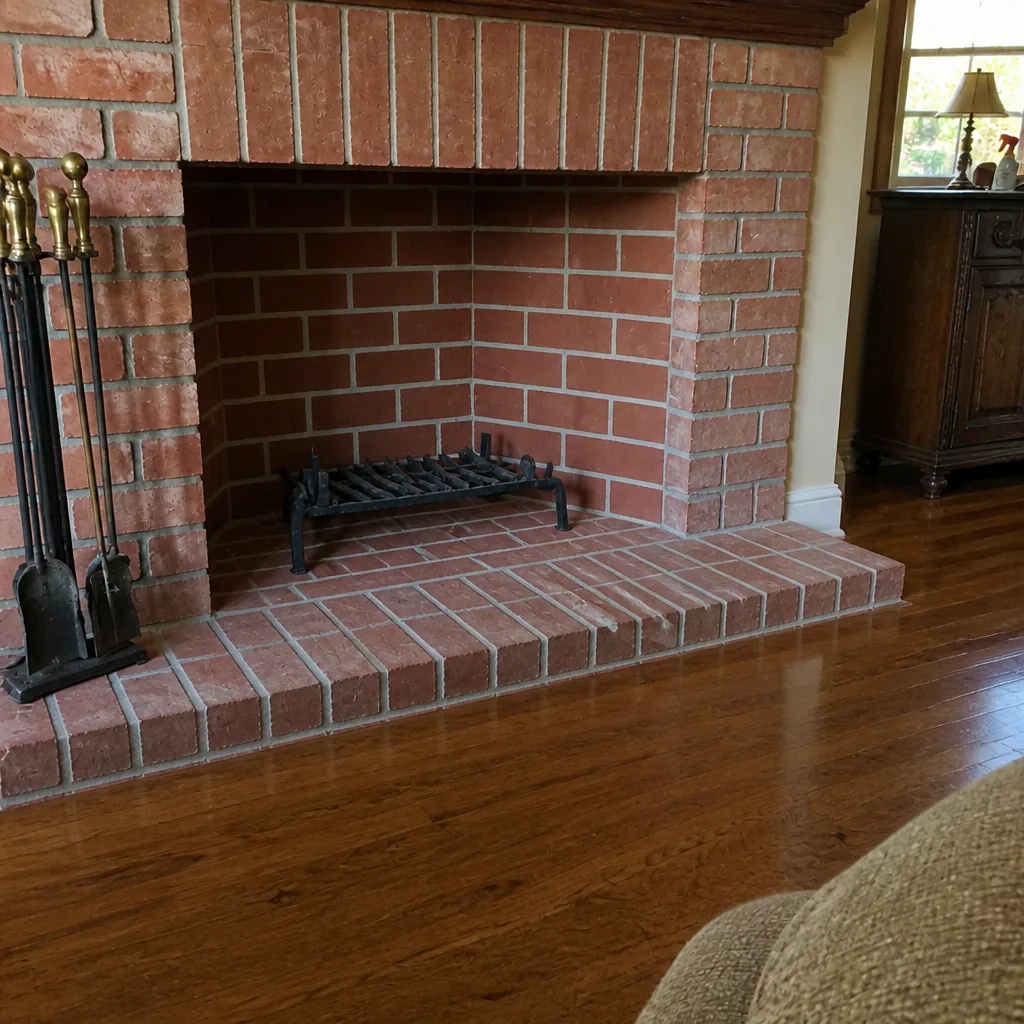
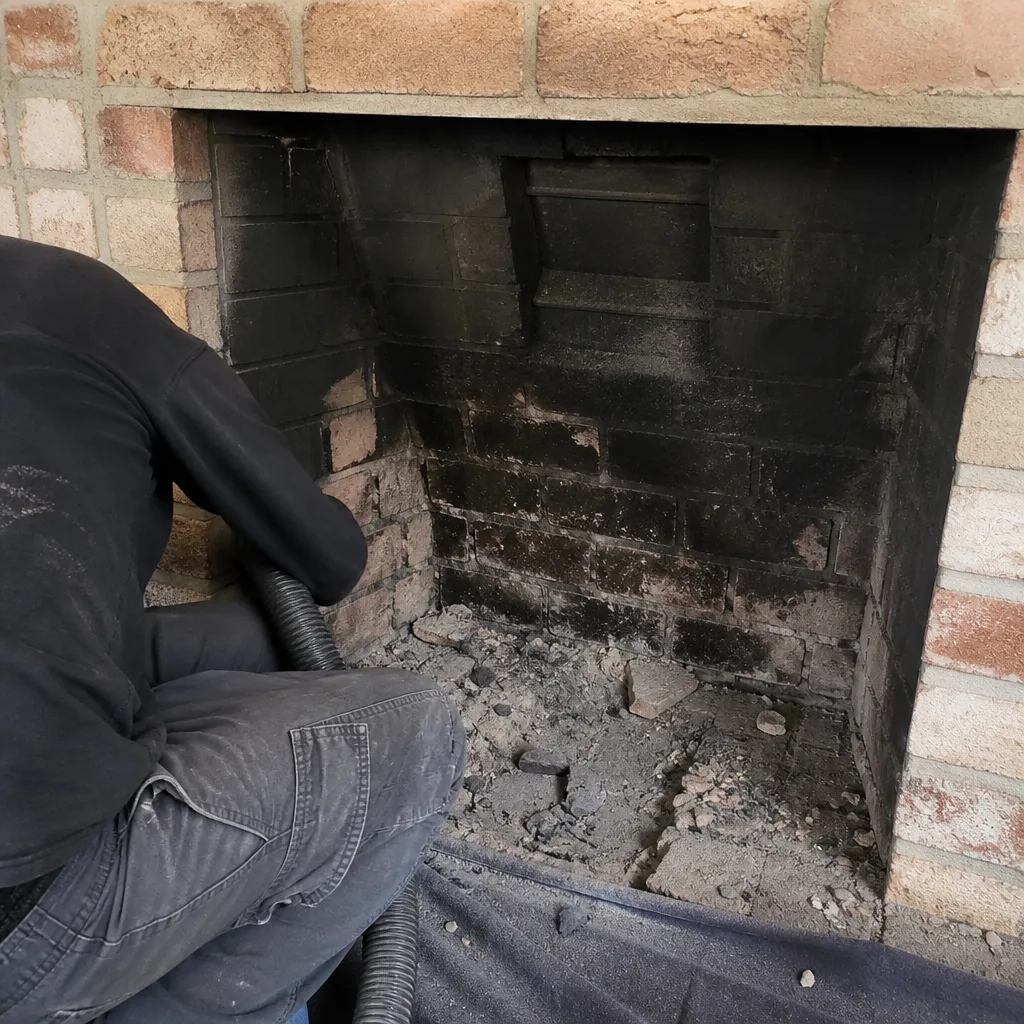
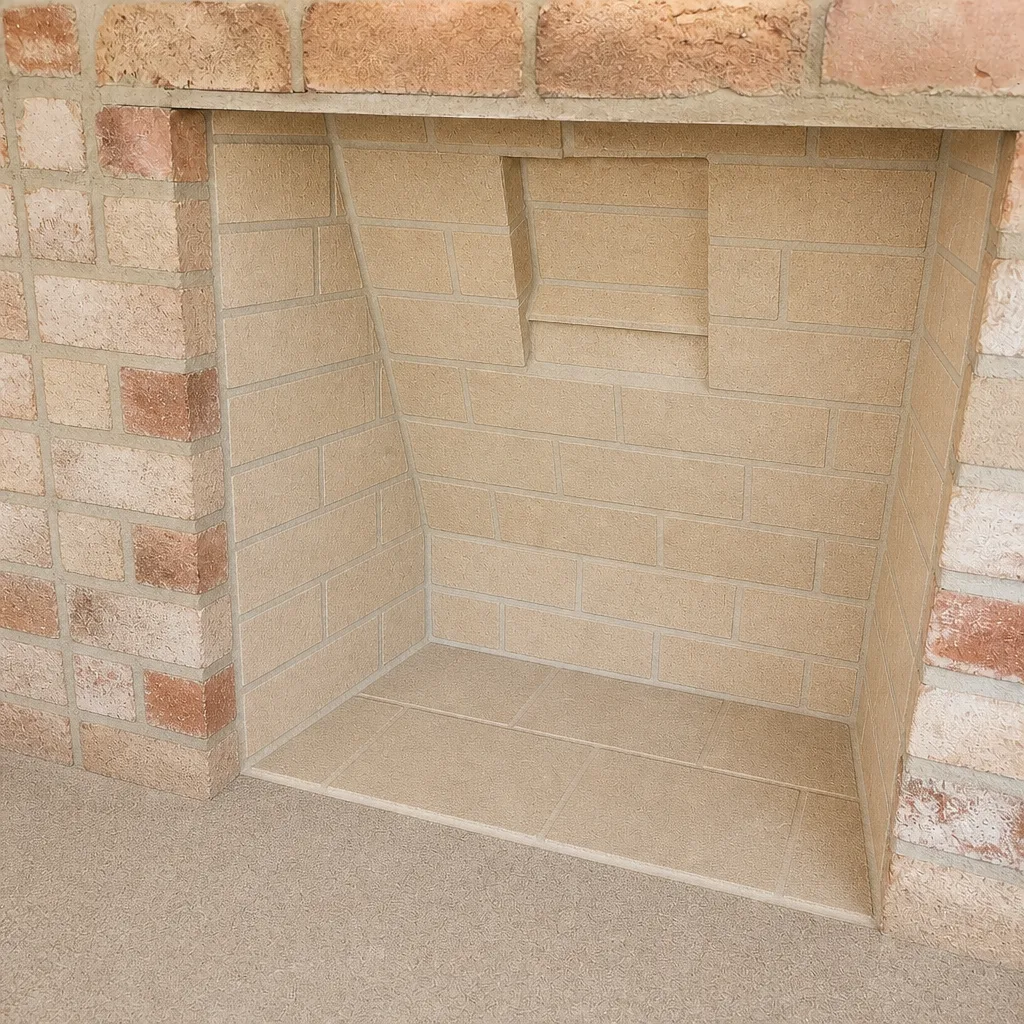
See the difference
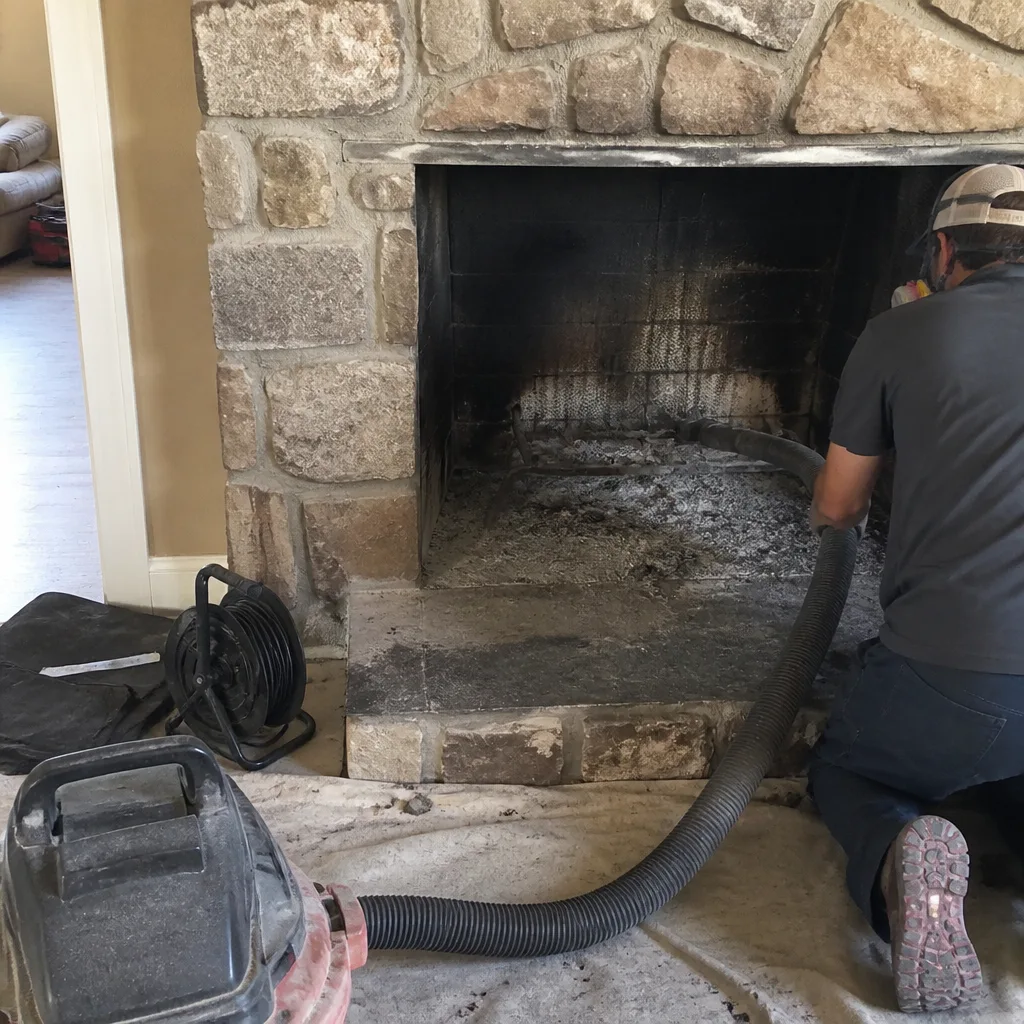 Before
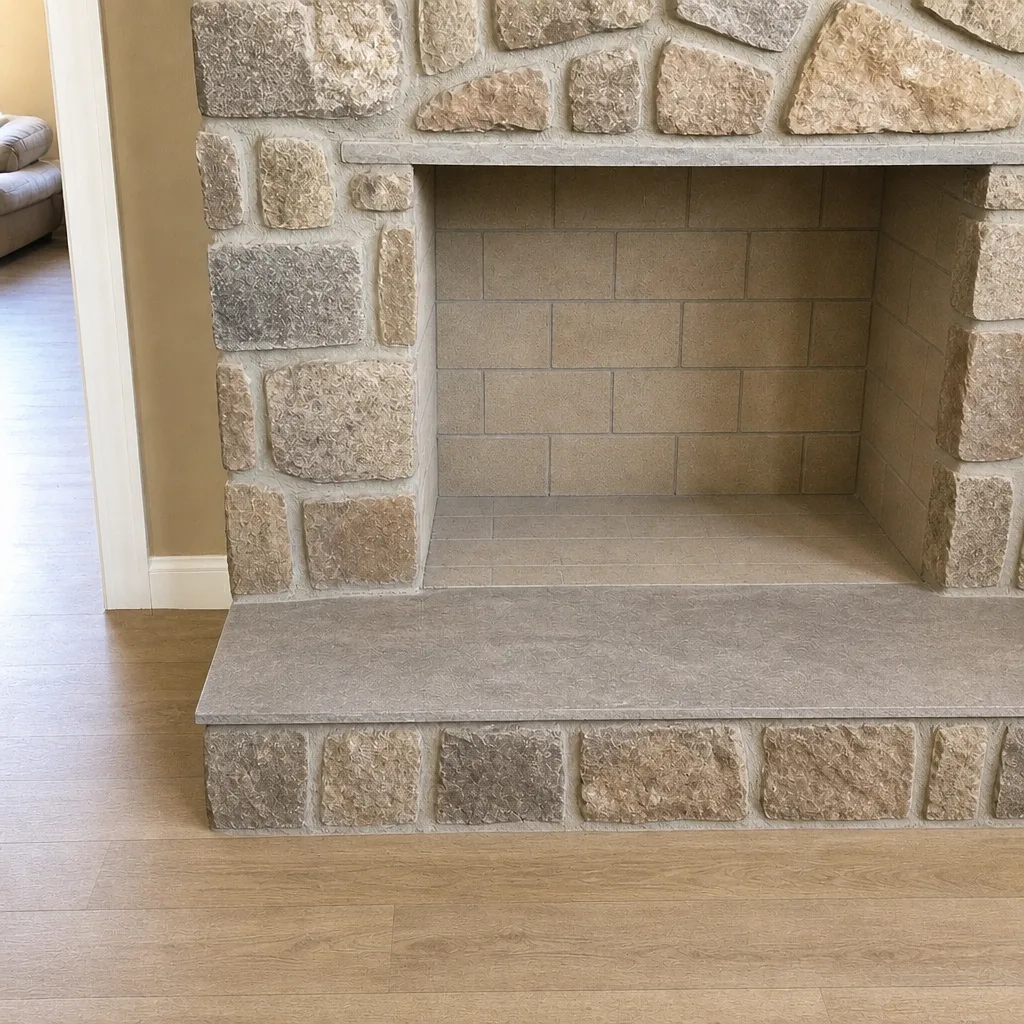 After
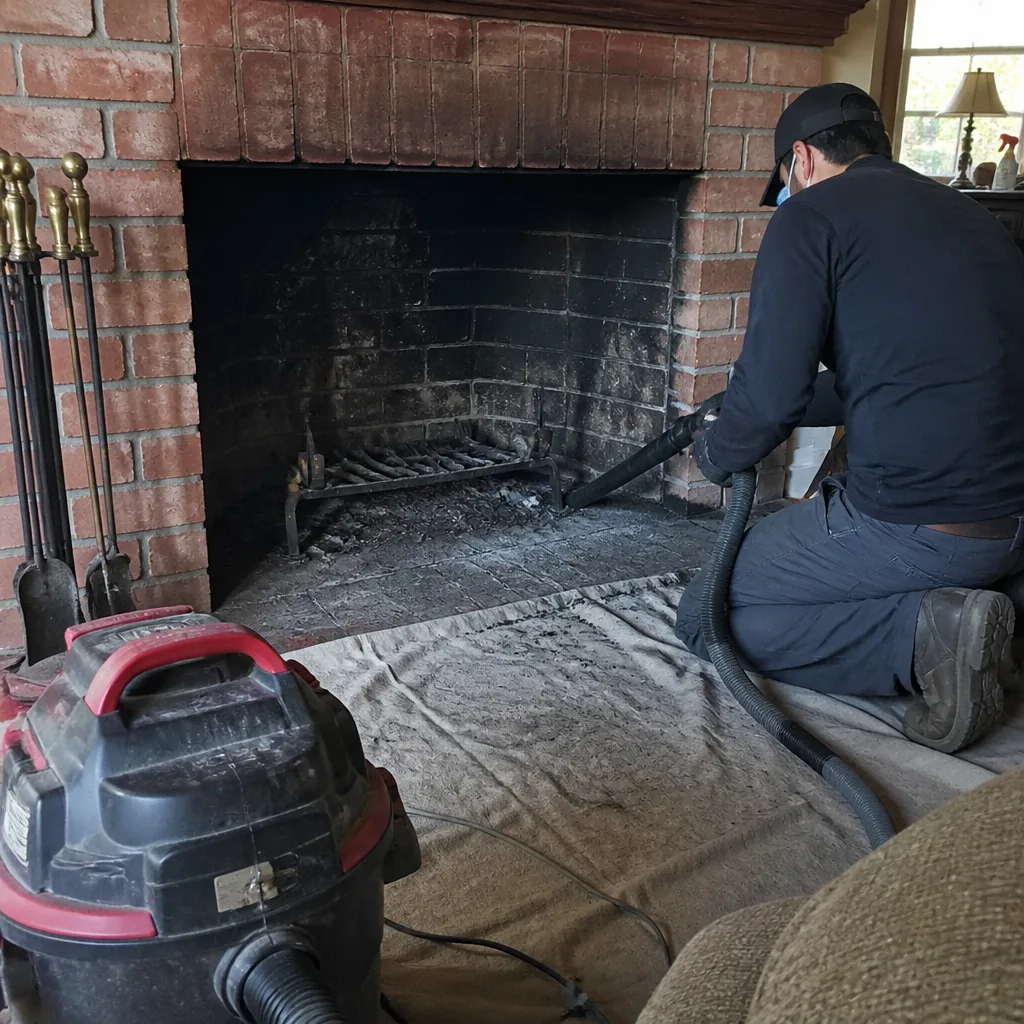 Before
 After
 Before
 After
When to Call a Professional
Chimney work is not a DIY category. Flue interiors involve high temperatures, combustion gases, and structural surfaces you can’t safely inspect from the ground, and a resurfacing or relining job has to be done from the top down with the right equipment. If your chimney hasn’t been inspected in more than a year, if you’re burning wood regularly through the winter, if you’ve just bought a Fairfield home and don’t know the flue’s history, or if you’re seeing smoke backdraft, water stains, or a crumbling crown, it’s time for a proper inspection. The same goes for your dryer vent if you can’t remember the last cleaning. Fairfield Chimney Cleaning offers free estimates in Fairfield – call (833) 946-3479 to get on the schedule. We tell you what we find and what it costs to fix it, before we touch anything.
Frequently Asked Questions
A standard chimney sweep in Fairfield typically runs in the low-to-mid hundreds, depending on the flue configuration, the amount of buildup, and whether a camera inspection is included. A full inspection with a photo report usually sits a bit higher than a basic sweep. The written estimate sets the final price, so ask for the scope in writing before booking. Call (833) 946-3479 for an exact quote – estimates are free.
It depends on the condition of the flue, and the two options are not interchangeable. Resurfacing with HeatShield works when the surface is deteriorating but the tile structure is intact; a full reline is the right scope when tiles are cracked through, displaced, or missing. The only way to know is a camera inspection with photos you can see. Ask for those photos before approving any liner work, and ask the contractor to explain why resurfacing won’t do. If you’re told a liner is the only option without a clear reason, get a second opinion. Call (833) 946-3479 to schedule an inspection – estimates are free.
For a wood-burning fireplace in regular use, an annual inspection is the standard recommendation, with a sweep when the inspection shows enough creosote to warrant it. A gas appliance with a masonry or metal flue needs a check on a similar cadence, because the risks are different but the need for a clean, unobstructed vent is the same. In Fairfield, homes that burn regularly through the cooler months should plan on a yearly look. Call (833) 946-3479 to book your inspection – estimates are free.
Creosote accumulates in the flue as you burn, and at certain concentrations it can ignite – that’s the mechanism behind a chimney fire, and a flue that isn’t inspected can carry a buildup you have no way to see from outside. A blocked or deteriorated flue also affects carbon monoxide venting, which is a risk whether or not you burn wood. Skipping a year isn’t a crisis, but skipping several isn’t a plan. Call (833) 946-3479 to get an inspection on the schedule – estimates are free.
Sometimes. A professional inspection with a camera can often tell you the material and construction of the liner, and occasionally the manufacturer’s markings are visible at the top or bottom of the flue. But most liners don’t carry a visible label after installation. The more reliable route is to ask the previous owner, check the disclosure documents if you bought the home recently, or ask for the original install paperwork. If none of that exists, an inspection tells you the condition even if the brand stays a mystery. Call (833) 946-3479 for a Fairfield-area inspection – estimates are free.
Yes, in two specific ways. The Tule fog that settles across the valley in late fall and winter cycles moisture through masonry on a regular basis, which makes flexible crown products like CrownSeal and CrownCoat hold up better than rigid Portland-only patches. And the seasonal temperature swing means liners and components that are rated for cycling rather than only steady high heat are the better long-term fit. Neither point is unique to one brand, but both argue for specification-grade materials over hardware-store substitutes. Call (833) 946-3479 to talk through your flue – estimates are free.
The Bottom Line
The brand name on your estimate is a starting point, not a guarantee. What matters is whether the product is professional-tier, whether the contractor can show you the listing and the spec sheet, and whether the recommendation fits your actual flue and your actual burn pattern. HeatShield, DuraFlex, Gelco, Olympia Chimney, Famco, and Copperfield are the names we work with because they’re the ones with traceable paper behind them – but none of them substitutes for a proper inspection with photos you can see. In Fairfield, ask the questions, get the answers in writing, and treat any estimate that can’t name its materials as a reason to look further.
Written by the team at Fairfield Chimney Cleaning.
Ready to schedule? Call (833) 946-3479. We answer 24/7. Fast dispatch from 7am to 7pm, Sunday through Friday. Estimates are free, and the price is set per job by the written estimate.