
Last updated November 15, 2026
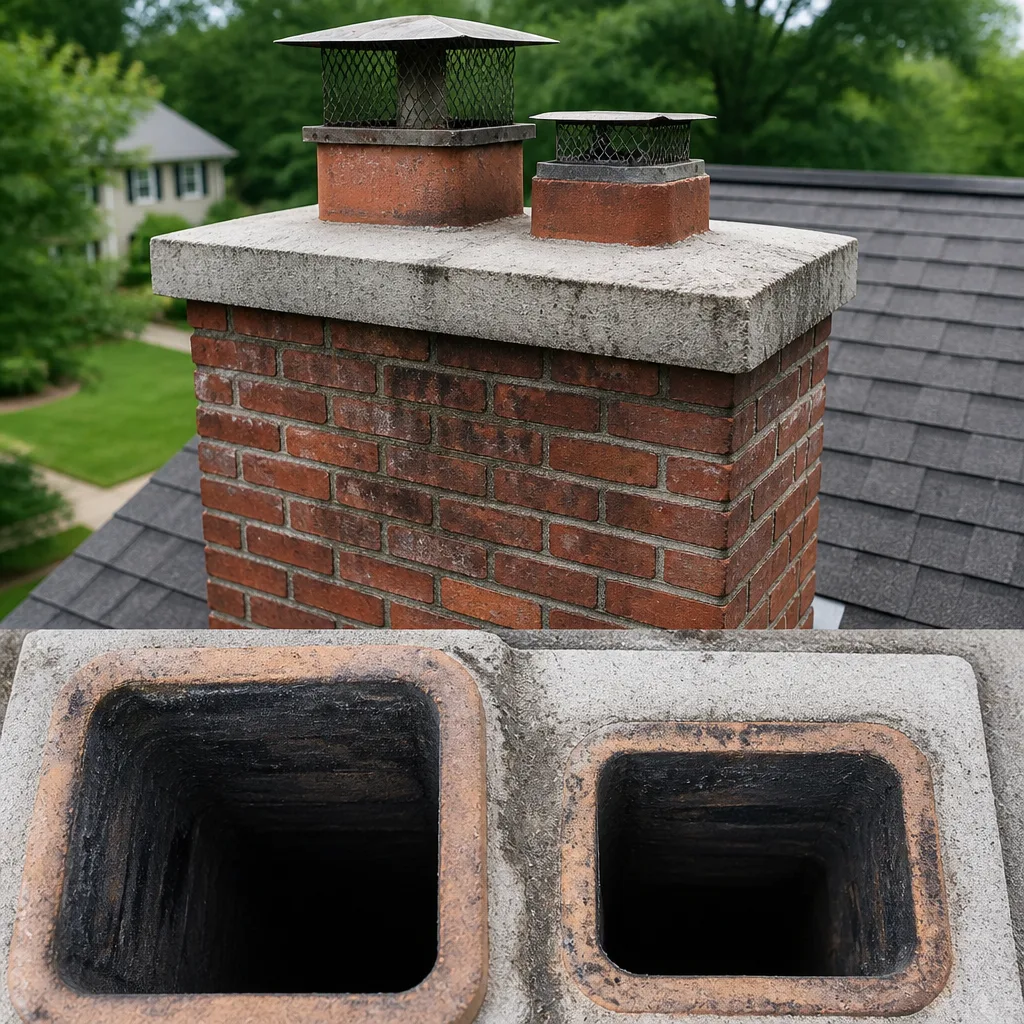 Sweep & inspection
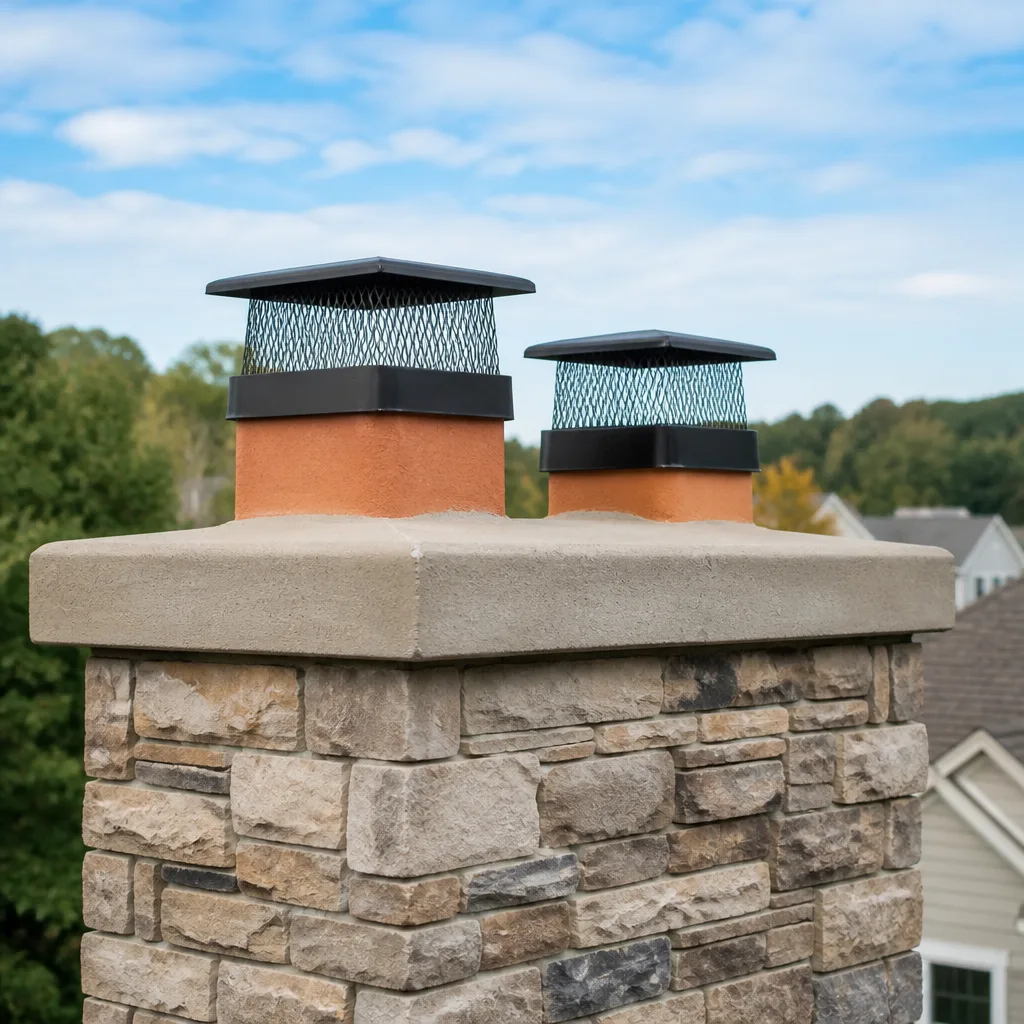 Caps & crowns
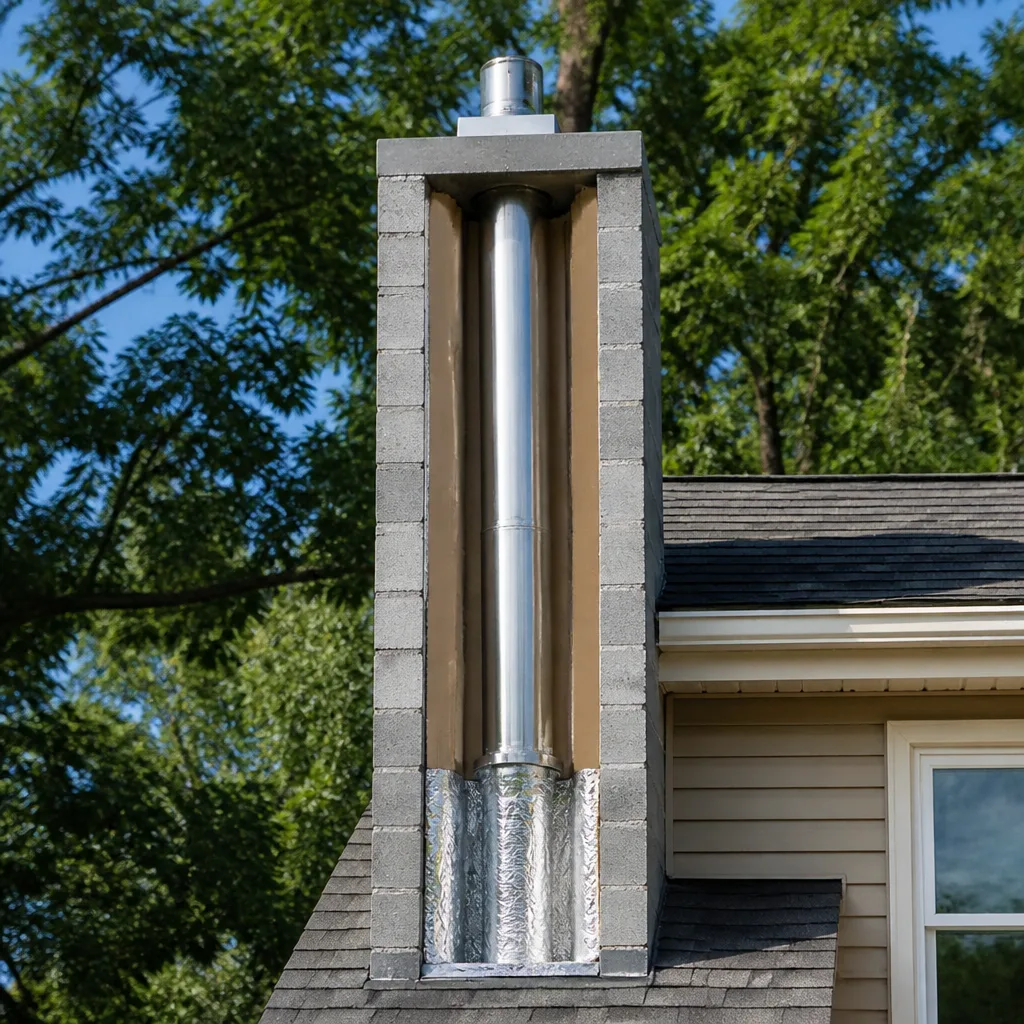 Flue relining
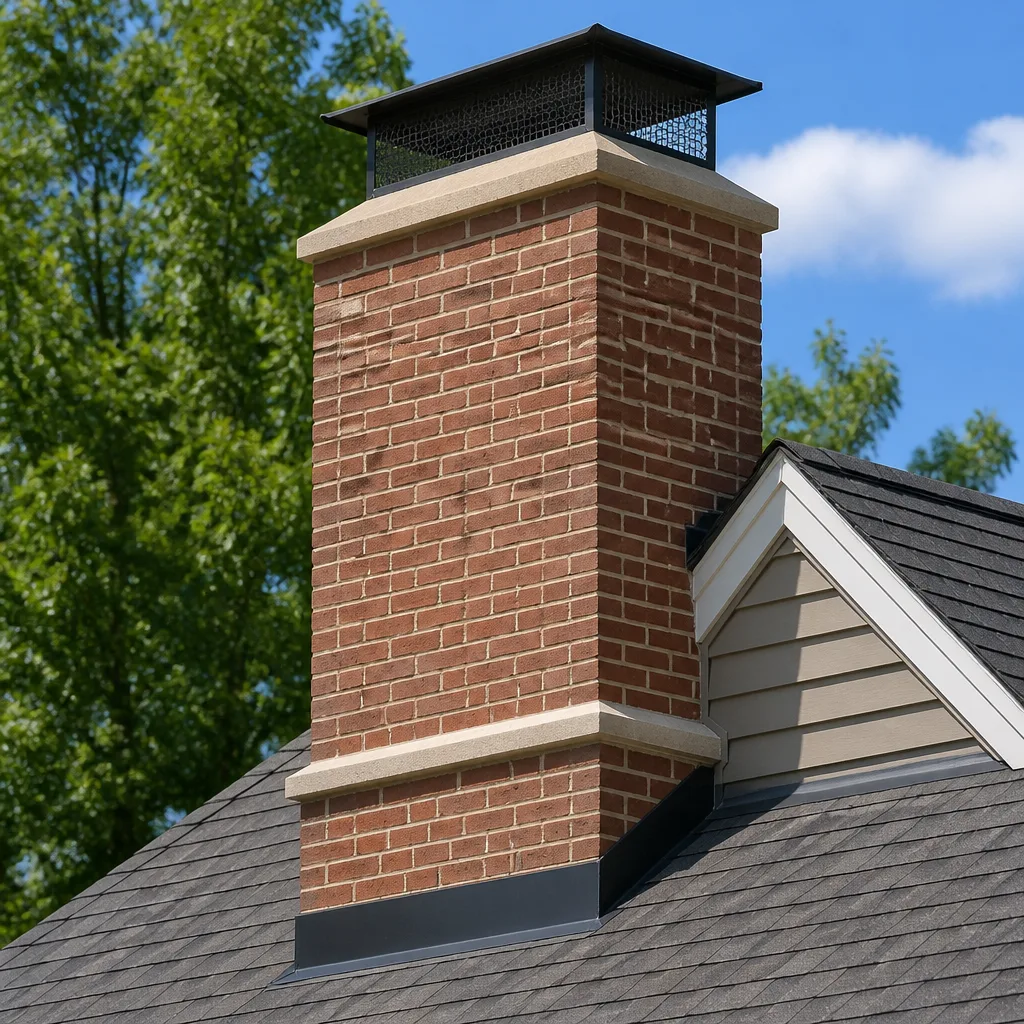 Masonry repair
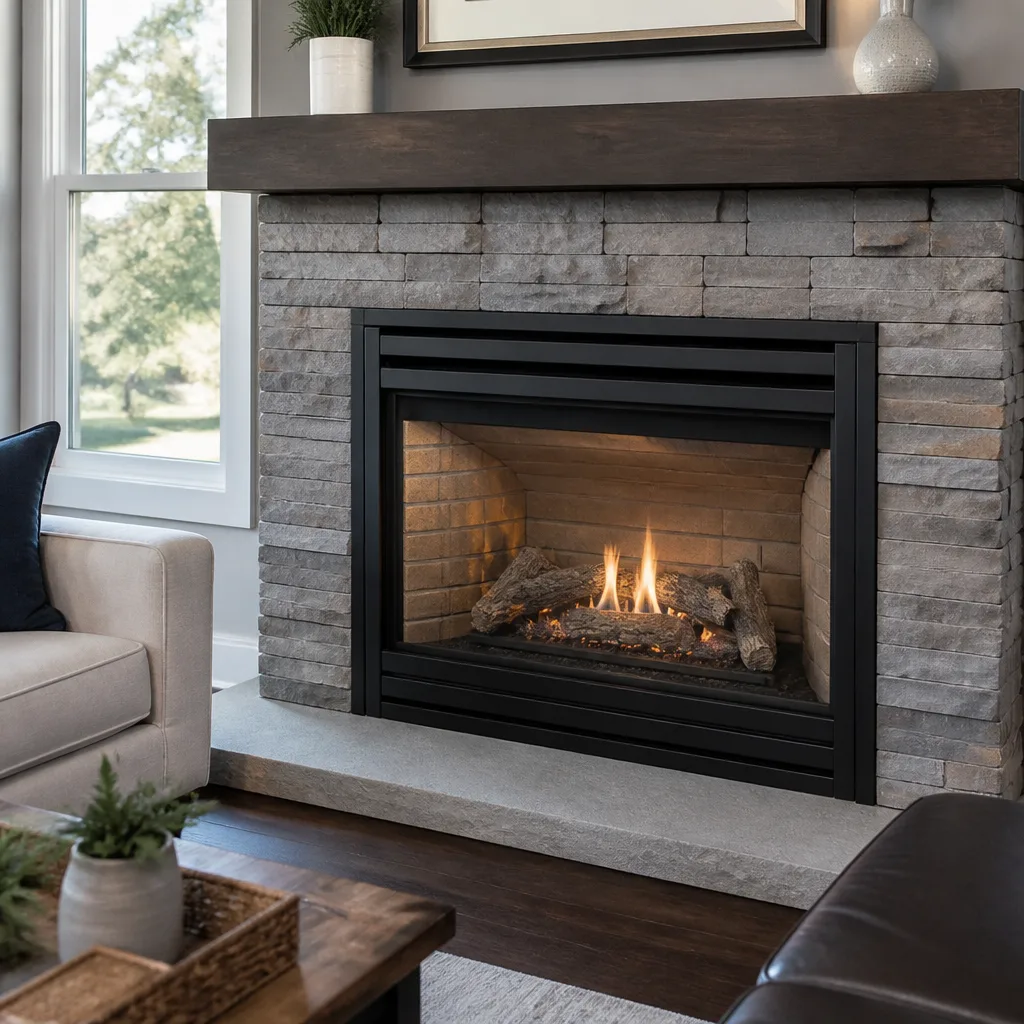 Gas fireplace service
Level 1 sweep and inspection to the NFPA 211 annual standard - flue, crown, cap, and flashing checked and photographed
Chimney sweep logs do not sweep chimneys. They loosen some creosote - which then falls where a brush and vacuum still have to collect it.
DIY vs Professional Chimney Cleaning: The Fairfield Homeowner’s Decision Guide
Here’s a thing that surprises a lot of homeowners: you can run a brush down your own flue and walk away with a dirtier chimney than you started with. Without a containment setup at the firebox, a brush matched to your liner’s actual diameter, and an understanding of how draft pulls debris through the house, sweeping a chimney from the top down tends to redistribute creosote into living space instead of removing it. Anyone selling a DIY kit rarely mentions that. This guide is about drawing a real line, not a marketing line. We’ll show you exactly which chimney tasks a Fairfield homeowner can handle safely, which ones need equipment and training no consumer can reasonably replicate, and how to tell the difference on your own system.
Quick Answer
Homeowners can safely remove ash from the firebox, check the cap and crown from the ground, test the damper by hand, and occasionally brush an accessible Class A metal flue on a wood stove. The tasks that need a professional are liner condition assessment, creosote stage identification, smoke chamber work, and any cap, crown, or flashing repair – because each requires visual access, camera equipment, or certification most DIY kits don’t cover. A sweep by a trained technician is the lowest-cost way to know what’s actually happening inside your chimney; guessing at it is where the real cost lives.
Styles & brands we work with
- Sweep & inspection
- Caps & crowns
- Flue relining
- Masonry repair
- Gas fireplace service
Table of Contents
- What Fairfield Homeowners Can Legitimately Do Themselves
- What Genuinely Requires a Professional
- The Brush Sizing Problem Nobody Talks About
- Reading Creosote Stages: Why “Looks Clean” Isn’t the Test
- Containment, Draft, and Why DIY Sweeps Backfire
- Insurance and Liability Reality After a Chimney Fire
- The One Scenario Where DIY Brushing Makes Sense
- When to Stop and Call Someone
What Fairfield Homeowners Can Legitimately Do Themselves
There’s a real list here, and it’s longer than most chimney companies admit. Fairfield’s mild winters mean a lot of homeowners burn intermittently rather than continuously, which changes how quickly ash accumulates and how often the firebox needs attention. Here’s what you can actually handle:
- Firebox ash removal. A metal scoop, a heavy-duty bucket with a lid, and a shop vacuum rated for cold ash will get this done. Wait at least 72 hours after the last fire before you touch anything, and never vacuum warm ash into a standard shop vac. Ash carries embers for a long time in an insulated firebox.
- Visual cap and crown inspection from the ground. Binoculars work fine. You’re looking for rusted or missing cap mesh, cracked crown mortar, and obvious debris like leaves or bird nests visible at the top of the flue. If you see anything at this level, that’s already a call-a-professional moment, not a fix-it-yourself moment.
- Damper operation check. Cycle the damper fully open and closed by hand. It should move smoothly and seat flush. A damper that sticks, rattles, or doesn’t close fully is a sign of warping or debris, and that’s worth a professional look.
- Firebox and hearth cleaning. Sweeping up soot and ash that’s spilled onto the hearth is normal maintenance and doesn’t require anyone’s help.
- Checking the smoke detector and CO detector batteries. This isn’t chimney work per se, but it’s the single most important safety task that pairs with every fire you build.
What’s actually required for this short list: a metal ash scoop, a metal bucket with a lid, a shop vac rated for cold ash, work gloves, safety glasses, and a decent flashlight. That’s it. None of it needs certification, and none of it is dangerous if you follow the basic rules. Where homeowners get into trouble is when this list gets confused with the tasks in the next section.
What Genuinely Requires a Professional
This is where the DIY framing starts to fall apart, and it’s not because professionals are protective of their trade. It’s because four specific tasks have hard physical or informational barriers that consumer equipment can’t clear. Here’s the breakdown of what requires a trained technician and why:
- Liner condition assessment. You can’t see the full interior of a flue from the firebox, and you can’t see it from the roof either. A proper assessment uses a camera run the length of the flue, and that camera shows things a flashlight never will: hairline fractures, gaps at joints, spalling on terra cotta tiles, and misaligned sections. Without that view, you’re guessing at the most expensive part of the system.
- Creosote stage identification. Creosote exists in three stages, and the third stage – glazed, hardened, tar-like – is what causes chimney fires. It’s also nearly impossible to remove with a standard brush. Identifying which stage you’re dealing with requires both visual confirmation and a technician’s experience with how different fuels and burn patterns produce different deposits. A homeowner looking up the flue with a flashlight is usually looking at stage one deposits on the smoke chamber and concluding the chimney is clean.
- Smoke chamber parging. The smoke chamber is the transition between the firebox and the flue. In many older Fairfield homes – and there are plenty of mid-century builds in neighborhoods like Cordelia and Green Valley – that chamber was never properly parged, meaning the corbelled brick has exposed edges that catch creosote and reduce draft. Proper parging is a skilled application, often using a product like HeatShield to smooth and restore the surface. There’s no consumer version of this work.
- Cap, crown, and flashing repair. These aren’t difficult tasks in theory, but they’re roof work, and roof work means heights, weather, and the very real possibility of making a water intrusion problem worse. A cap installed with the wrong clearances can restrict draft; flashing repaired incorrectly lets water into the chimney chase. These repairs also need specific components – we use Copperfield and Famco for venting and accessory work because those are the parts HVAC and chimney professionals specify – not whatever’s at the hardware store.
If you’re in Fairfield and you’ve never had the flue scanned with a camera, you don’t actually know the condition of your liner. That single fact is the reason we include a camera inspection and photo report with every sweep – so the homeowner sees what we see.
The Brush Sizing Problem Nobody Talks About
Here’s a specific failure mode most DIY guides never mention: using the wrong diameter brush on a terra cotta liner causes hairline fractures that don’t show up until someone runs a camera down the flue. This isn’t hypothetical. It’s one of the most common findings when we scan a chimney that’s been “maintained” by a homeowner with a kit brush.
Terra cotta flue tiles are fired clay. They’re durable, but they’re brittle, and they don’t like impact or flexing. The brush you use has to be sized to the actual interior diameter of the tile – not “close enough.” If the brush is too large, the bristles jam against the tile and the brush handle flexes, which transfers force to the tile edges. If the brush is too small, it doesn’t contact the flue walls at all and does nothing but knock down loose soot. Neither failure is visible from the rooftop, and neither is visible from the firebox. Both show up on a camera scan as spalling, chipped edges, or hairline fractures that eventually become gaps where creosote can collect and heat can transfer to framing.
The other sizing problem is brush material. Wire brushes are for metal liners and specific cleaning tasks; poly brushes are for clay tile and most other liners. Using a wire brush on terra cotta scores the surface and accelerates wear. Using a poly brush on heavy glazed creosote does essentially nothing. Matching brush material and diameter to the actual flue is a decision that requires knowing what the flue is made of, which requires looking at it up close, which brings us back to the camera.
- Standard terra cotta tile: Poly brush, sized precisely to the tile’s interior diameter.
- Stainless steel liner (DuraFlex and similar): Poly or specific wire depending on the liner manufacturer’s specification and the deposit type.
- Cast-in-place or resurfaced liner: Poly brush, sized to the finished interior dimension, never a wire brush.
- Unknown liner material: Sweep only after identification. This is not a “brush it and see what happens” situation.
We’re not saying this to be precious about equipment. We’re saying it because we’ve seen the fractures, and they’re the kind of damage that leads to a full reline conversation a homeowner never expected to have. A DuraFlex liner system, properly sized and installed, is the fix when tile damage gets bad enough – and that’s a cost that a correctly sized $40 brush would have avoided.
Reading Creosote Stages: Why “Looks Clean” Isn’t the Test
The single most dangerous assumption in DIY chimney maintenance is that a flue that looks clean from below is actually clean. Creosote forms in three recognized stages, and only the first stage is what most homeowners are looking at when they shine a flashlight up the firebox. Here’s what each stage actually means for your system:
- Stage one: soot and light flaky deposits. This is the easiest to remove and the most common finding after a season of normal burning. A properly sized poly brush will handle most of it. It’s also the only stage where a homeowner’s brush is likely to make a real difference rather than a cosmetic one.
- Stage two: hardened, crusty deposits. This is where deposit thickness starts to reduce the flue’s effective diameter and interfere with draft. Standard brushes knock down the surface but leave the base of the deposit behind. Removing stage two deposits typically needs rotary equipment and a technician who knows how much pressure the liner can take.
- Stage three: glazed, tar-like deposits. This is what causes chimney fires. Stage three creosote is bonded to the flue surface, it ignites at high temperature, and it burns hot enough to crack terra cotta tile and transfer heat to the framing behind it. No brush removes it. Removal requires chemical treatment or, in some cases, liner replacement – and identifying that you have stage three requires a camera scan and a trained eye.
Fairfield’s burn patterns matter here. Because winters are mild, a lot of homeowners burn in shorter, cooler fires rather than maintaining a hot, efficient burn throughout the season. Cooler fires produce more creosote, and that creosote is more likely to reach stage two and three. A home in Fairfield with a fireplace that’s been used lightly for years can have heavier deposits than a home that’s been burned hard in a colder climate. That’s why the “how often should I sweep” question doesn’t have a simple seasonal answer – it depends on how the system has been used, and the only way to know is to look.
The good news is that a proper sweep with a camera inspection tells you which stage you’re dealing with in a single visit. Our chimney sweep includes that photo report so you’re not taking our word for it.
Containment, Draft, and Why DIY Sweeps Backfire
Containment is the part of a professional sweep that homeowners almost never replicate, and it’s the part that determines whether the job removes creosote from your home or redistributes it. Here’s the mechanism: when you run a brush down a flue from the roof, the dislodged material falls. If the firebox isn’t sealed with a proper containment system – a sealed plastic or canvas shroud with a vacuum connection, connected to a HEPA-rated chimney vacuum – that falling debris enters the living space. Soot and creosote dust are fine particulates. They coat furniture, walls, and HVAC intakes. And creosote dust in particular is a health hazard, not just a mess.
Draft is the second issue. A chimney is a column of air with a pressure differential between the firebox and the top. Brush a flue without managing that pressure differential and you can pull fine soot back through the house even after the containment is removed. Professional sweeps manage this by controlling air pressure at the firebox, keeping the flue under negative pressure during the entire job so material moves toward the vacuum, not out into the room.
Here’s the sequence a professional sweep follows, and it’s worth seeing laid out so you know what you’re paying for:
- Pre-inspection: Visual check of the firebox, damper, smoke chamber, and roof-level components. Identify the flue material and diameter.
- Containment setup: Seal the firebox opening with a fitted shroud connected to a HEPA vacuum, so nothing enters the room.
- Camera scan: Run a camera the full length of the flue to identify creosote stage, liner condition, and any damage before brushing.
- Sweep: Correct brush material and diameter matched to the flue, worked from the top down with containment holding.
- Second camera pass: Confirm the flue is actually clean and note anything the brush didn’t remove.
- Report and photo documentation: What we found, what’s normal, what needs attention, and (if anything does) what it costs to fix.
The photo report at the end isn’t a courtesy. It’s the difference between a sweep and a guess. We tell you what we find and what it costs to fix it – before we touch anything. If your fireplace is the only one in the house and you want a yearly baseline in Fairfield, the containment and camera steps are what make the visit worth the price.
Insurance and Liability Reality After a Chimney Fire
This is the part of the DIY conversation most homeowners haven’t considered: if a chimney fire happens, your homeowner’s insurance company is going to ask when the system was last cleaned and by whom. The answer to that question has real weight, and it’s worth understanding before something happens, not after.
Most homeowner policies cover fire damage, but coverage depends on maintenance. A chimney fire in a system that hasn’t been documented as cleaned and inspected in years – or worse, a system that’s been “maintained” by an untrained homeowner with a brush and no record – can lead to a claim review. Insurers don’t always deny on this basis, but they do ask, and “I swept it myself” without any documentation of liner condition or creosote stage is a weak answer when the adjuster wants proof the system was in serviceable condition.
A professional sweep creates a record: date, findings, liner condition, creosote stage, photo documentation. That’s a piece of paperwork you didn’t know you needed until you do. It’s also the record a manufacturer relies on when a liner warranty is at stake, and the record a buyer’s inspector expects to see if you sell the home.
Here’s what most homeowners don’t realize about liability: if a chimney fire damages your neighbor’s property or causes injury to a guest in your home, the civil liability question is the same one the insurance adjuster asks. Documented maintenance doesn’t make a fire impossible, but it establishes that the system was in reasonable condition and maintenance was current. That’s a position you want to be in.
We can work with your insurer on documentation if a loss does happen. We can’t promise what any specific policy says, and you should ask your own agent directly. What we can promise is that the sweep report exists, the photos exist, and the record is there when someone asks for it. If you’re a Fairfield homeowner who’s been sleeping on this because “it looks fine,” that’s the gap worth closing first – before you burn again.
The One Scenario Where DIY Brushing Makes Sense
There’s a legitimate case for homeowner chimney work, and it’s specific: a wood stove with a Class A insulated chimney installed through the wall, where the entire flue run is accessible and can be brushed from the ground or a low roof edge without climbing, and the homeowner knows the flue is stainless and undamaged. In that scenario, a properly sized poly brush on a flexible rod, done with something over the stove opening to contain dust, is a reasonable light maintenance task between professional sweeps.
Here’s what makes it reasonable where other situations aren’t:
- Access is safe. No ladder work at a roofline, no climbing a steep roof to reach the top of the flue.
- The liner is metal and known. No terra cotta tile, no unknowns, no risk of hairline fractures from the wrong brush.
- The flue diameter is known. The manufacturer specified it, and the brush can be sized to it exactly.
- The deposits are stage one. Light soot from a wood stove that’s burned efficiently is the only thing this scenario handles.
- The homeowner still gets a professional scan at the start of every burning season. DIY brushing between scans doesn’t replace the scan; it sits between them.
Now the counter-scenarios. A masonry fireplace with terra cotta tile: no. A chimney the homeowner has never had scanned: no. A fireplace with a history of heavy burning and possibly glazed deposits: no. Any system where the flue material is unknown or the liner condition hasn’t been confirmed: no. Any case where the brush size can’t be matched precisely: no. Any case involving roof access: no.
If you’re not sure which scenario you’re in, that’s the answer. The professional scan is what tells you. Once you have that in writing, you can decide what’s worth doing yourself going forward – with the picture in front of you instead of a guess. A Fairfield homeowner with a wood stove and an accessible Class A install can legitimately do between-season brushing; a homeowner with a masonry fireplace and unknown liner condition can’t.
When to Stop and Call Someone
There’s a point in any DIY project where the right move is to stop and get help. For chimney work, that point comes earlier than for most other home maintenance, and it’s worth knowing the triggers in advance so you’re not deciding in the moment.
- You can’t see the full flue. If your camera or flashlight only reaches the smoke chamber, you’re not assessing the system. Stop and get a proper scan.
- You see glazed or tar-like deposits. Stage three creosote is not a brush problem. Stop before you make it a fire problem.
- The cap or crown looks damaged from the ground. Any rooftop repair involves height risk and the potential for making a water intrusion problem worse. That’s not a DIY task.
- There’s any smell of smoke in the house when the fireplace isn’t in use. This can indicate a drafting problem, a blocked flue, or a damaged liner. Have it looked at before your next fire.
- You’ve recently purchased the home and have no maintenance records. A baseline inspection is the cheapest thing you’ll ever do to the chimney, and it sets the record for everything that follows.
- There’s any sign of water intrusion around the chimney chase. This is a flashing or crown issue almost every time, and it’s a repair, not a cleaning task.
- You’re not sure the liner is intact. “Not sure” is a stop sign. The liner is the safety-critical component; it’s not the place for optimism.
Most of these triggers point to the same thing: get a camera scan before you make another decision. If you’re in Fairfield and you’re at that point, a professional sweep is the next step, and the photo report will tell you exactly where you stand.
Common Mistakes to Avoid
- Buying a brush “close enough” to the flue size. A brush that’s one size off either scores the tile or does nothing. On a terra cotta flue, that scoring becomes a hairline fracture and eventually a reline conversation. Get the diameter right or don’t brush.
- Sweeping without containment. Dislodged creosote dust ends up in the room. It’s a health hazard and it’s a cleanup problem, and it’s the most common reason a DIY sweep ends up costing more than a professional one.
- Confusing a clean-looking firebox with a clean chimney. The deposits that matter are higher up, past where a flashlight reaches. If you haven’t seen the flue with a camera, you haven’t seen the flue.
- Using a wire brush on terra cotta. Wire brushes are for specific metal liner applications. On clay tile they score the surface and accelerate damage.
- Skipping the sweep because the burn was “light.” Cooler, shorter fires in Fairfield’s mild winters produce more creosote, not less. “Light use” doesn’t mean “low deposits.”
- Doing roof work to save a service call. A cap or crown repair on a roofline is one of the highest-injury-risk tasks in home maintenance. It’s not the place to test your balance.
- Assuming the previous owner maintained it. If you bought in Fairfield and don’t have a documentation trail on the chimney, you’re working blind. A baseline scan is the only way to know what you actually own.
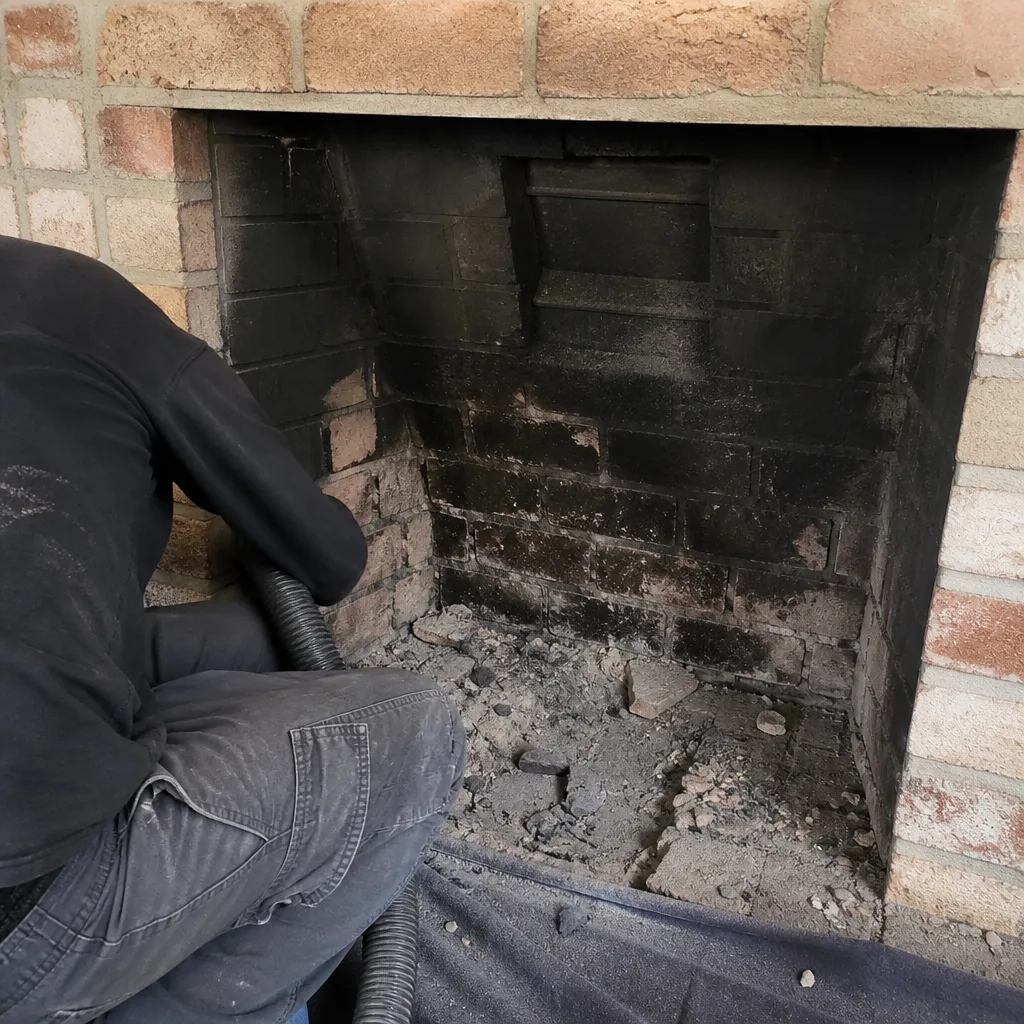
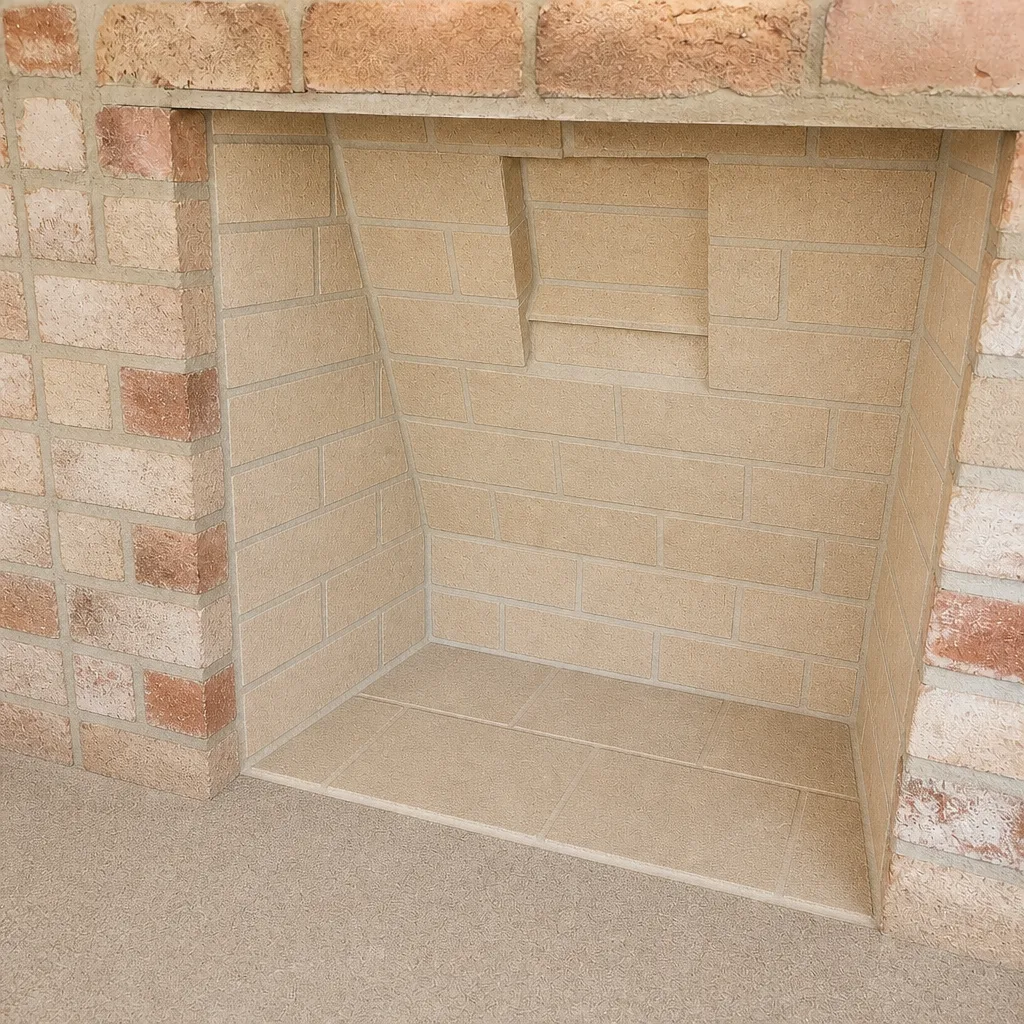
See the difference
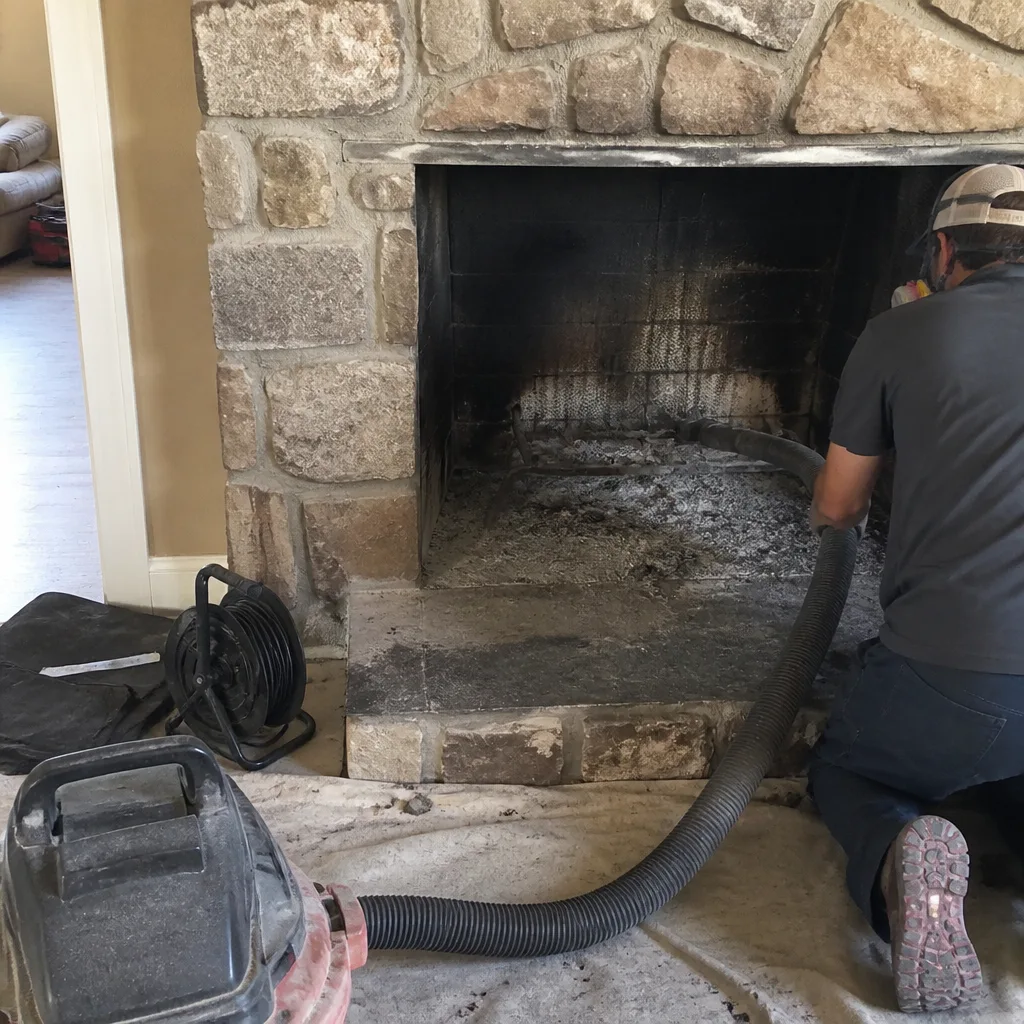 Before
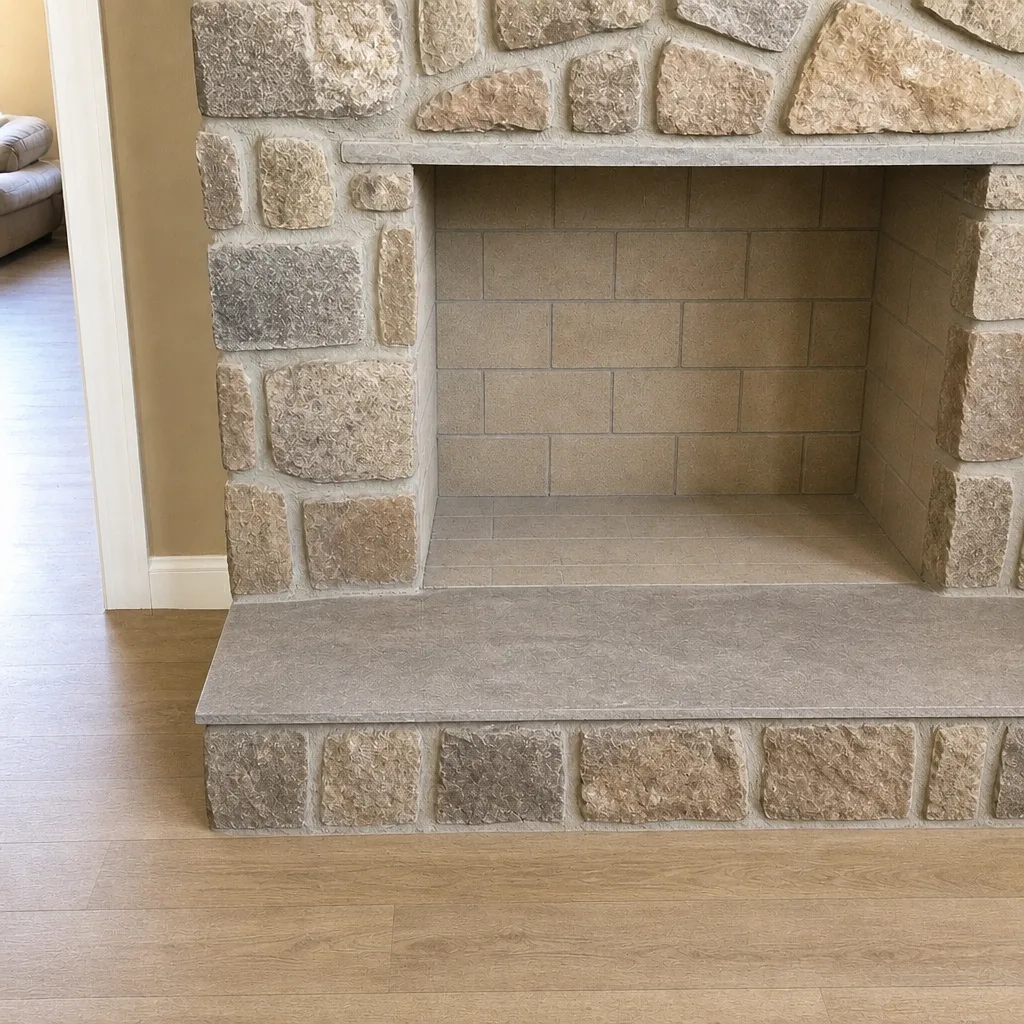 After
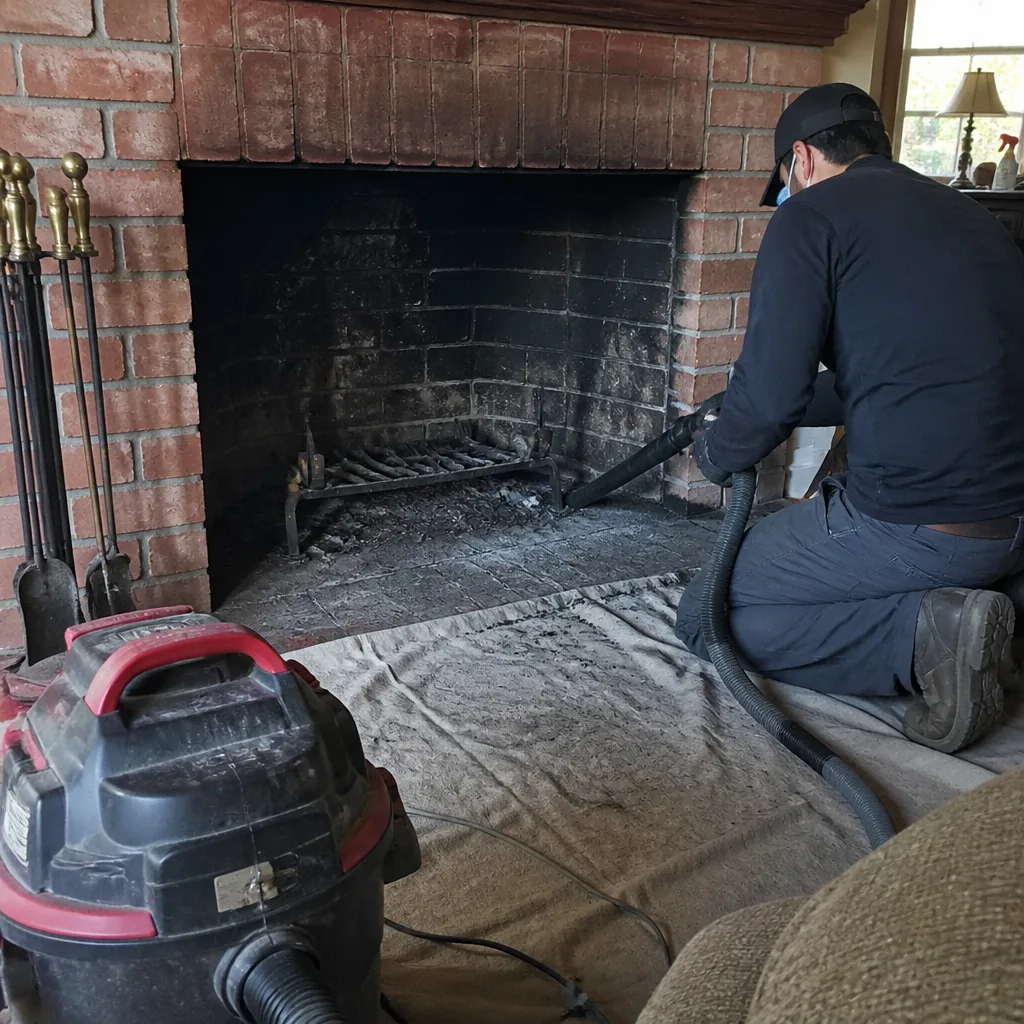 Before
 After
 Before
 After
When to Call a Professional
Call a professional when the answer to any of these questions is “I’m not sure”: what the liner is made of, what stage the creosote is, whether the smoke chamber is properly parged, whether the cap and crown are intact, or whether there’s any damage above the smoke chamber. The scan answers all of them in a single visit, and it produces documentation you can hand to an insurance adjuster, a buyer’s inspector, or a liner manufacturer if a warranty question ever comes up.
Call sooner if there’s smoke smell in the house, visible glazed deposits, water intrusion around the chase, or a recent purchase with no maintenance record. Those aren’t “wait and see” scenarios.
Fairfield Chimney Cleaning offers free estimates in Fairfield – call (833) 946-3479. We’ll take a look before we quote anything, and we’ll tell you plainly which of the items in this guide actually apply to your system. If the answer is “sweep it and you’re fine for another season,” that’s what the report will say. If there’s a liner or smoke chamber issue, we’ll show you the camera photo and quote the fix. If you also want the dryer vent cleaning done on the same visit – it’s a fire-safety system for the same reason your chimney is – we handle both under one booking.
Frequently Asked Questions
Partially. You can remove ash from the firebox, check the cap and crown from the ground, and test the damper. You can’t safely brush a masonry or terra cotta flue, assess liner condition, identify creosote stages, or perform roof-level repairs without equipment and training that most homeowners don’t have. The tasks that matter most to fire safety are the ones that require a professional scan.
The most common outcome is that the flue stays dirtier than it looks – creosote is redistributed rather than removed, and any liner damage from a wrong-sized brush goes unseen until it becomes expensive. The second most common outcome is that a developing liner or smoke chamber issue is missed entirely because no camera was run. Either way, the homeowner is left with a system that looks maintained but isn’t.
A camera inspection is what tells you what you actually have. A sweep without a scan is brushing in the dark: you can remove surface deposits without knowing whether the liner is intact, whether the smoke chamber is parged, or whether there’s glazed creosote above the brush’s reach. Every sweep we do includes the camera scan and photo report – the homeowner should see what we see, not take our word for it.
No, and it’s usually less. A DIY kit is a small upfront cost, but a failed sweep (redistributed soot, damaged tile from a wrong-sized brush, or a missed stage-three deposit that leads to a fire) is far more expensive than a sweep. The bigger issue is visibility: a professional sweep includes a camera scan and a documented report. A DIY kit includes neither, so any problem that develops isn’t caught until it’s a repair.
An ash scoop, a metal bucket with a lid, a shop vac rated for cold ash, work gloves, safety glasses, and a flashlight. That’s the honest list for what a homeowner should have on hand. Anything beyond that – brushes, rods, containment equipment, cameras – requires knowing the flue material and diameter, which is the professional’s job to determine.
There’s no single answer, because it depends on how the system has been burned and what’s inside it. The general rule is annually for any fireplace that sees regular use, but the more accurate approach is to get a scan at the start of each burning season and let the findings tell you when the next sweep is due. A lightly used fireplace with light deposits may stretch the interval; a heavily used one will need it sooner. The scan is what makes the schedule accurate.
Get a camera scan before you burn again. A DIY brush pass on a terra cotta flue can leave hairline fractures from a wrong-sized brush, and those are only visible on camera. The scan will tell you whether any damage was done and whether the deposits that matter were actually removed. If you brushed a wood stove’s Class A flue with a correctly sized poly brush, your risk is much lower – but it’s still worth having a professional confirm at the start of the season.
The Bottom Line
The DIY vs. professional question is really a question about which tasks belong in which column, and the line is clearer than most homeowners expect. Ash removal, ground-level cap checks, and damper testing are fair game. Liner assessment, creosote staging, smoke chamber work, and any roof-level repair are not, and the equipment to do them properly isn’t sold in a consumer kit. The containment system, the brush sizing, and the camera scan are the parts that turn a sweep into an actual inspection – and they’re why a professional sweep produces a documented record that a DIY pass can’t.
If you want a baseline on your system, we can give you one. We work with Fairfield Chimney Cleaning to bring professional-grade components – DuraFlex for liner systems, HeatShield for flue resurfacing when relining isn’t necessary, Gelco and Copperfield for the accessory work – into the same visit as the sweep. Our technicians have up to 12 years of experience. We tell you what we find and what it costs to fix it before we touch anything. Call (833) 946-3479 for a free estimate. We answer 24/7. Fast dispatch from 7am to 7pm, Sunday through Friday.
Written by the team at Fairfield Chimney Cleaning.